You own, or are about to own, a San Diego County home with a second unit behind it, over the garage or carved out of the main house, and a sale, a refinance, a divorce, an estate or a property-tax question now needs a number. The ADU makes that number harder to pin down than it would be for a plain single-family house, and the answer you have found so far has probably been an online figure that treats the unit as an afterthought. This page explains what an ADU appraisal involves, when one is called for, what changes the result, and what to gather first.
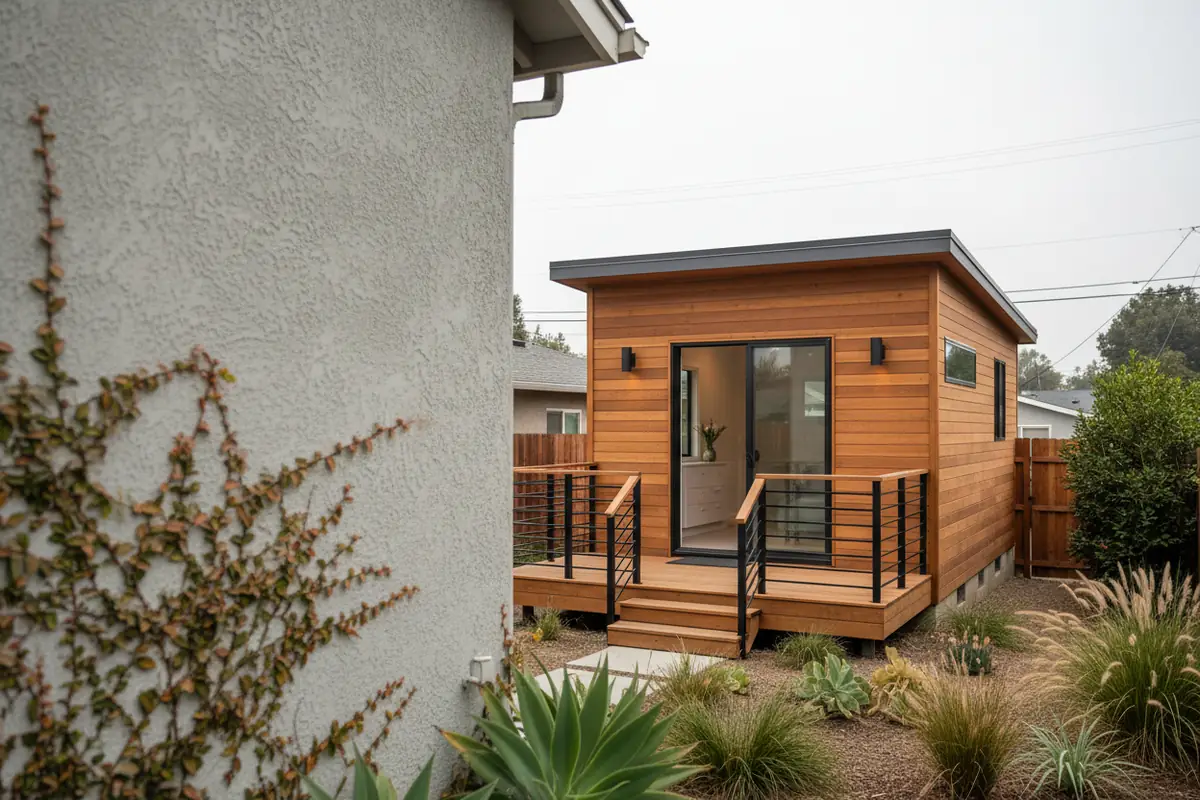
An ADU appraisal is an independent appraiser's written opinion of the market value of a property that includes an accessory dwelling unit. The appraiser values the whole parcel, the main house and the ADU together, as one property. It is the document a lender, a divorce court or a probate estate generally works from, and it is not the same as an online estimate or an assessed value.
On this page
Key Takeaways
An accessory dwelling unit, or ADU, is a second, self-contained living unit on the same lot as a main house. It can be a detached backyard cottage, a unit attached to the house, or a converted garage. A junior accessory dwelling unit, or JADU, is a smaller unit created within the walls of the main house.
- One property, one value. The appraisal covers the main residence and the ADU together as a single parcel, not two separate values added up.
- A statewide framework, local permits. California law permits ADUs statewide. San Diego County and the City of San Diego, like the county's other cities, apply their own local permit and development standards within that state framework.
- An appraisal is its own kind of document. An appraisal is an appraiser's opinion of market value for a stated purpose. A home value estimate is a computer-generated or reviewed figure, not an appraisal. A comparative market analysis, or CMA, is a real estate agent's look at nearby sales. The county assessor's assessed value is the figure used for property taxes.
- Permit status matters. Whether the ADU was built with permits is one of the facts an appraiser looks at most closely.
The difference between these figures is laid out further in the guide to what your home is worth.
When This Option Fits
The purpose of the appraisal shapes everything else about it, so the situations below are worth recognizing in your own.
A sale or purchase. When a buyer finances the purchase, the lender often requires an appraisal. Under 12 C.F.R. § 34.43, an appraisal by an appraiser holding a state credential is required for real estate-related financial transactions regulated by that rule, except those in which listed conditions apply, including a residential transaction with a transaction value of $400,000 or less, a transaction not secured by real estate, and several others the regulation names. Lender appraisals are common, then, but not universal.
A refinance. The same federal regulation frames a refinance. One listed exception covers certain existing extensions of credit at the lending institution, such as where no new money is advanced beyond funds for reasonable closing costs. Whether an exception applies is the lender's call.
A divorce. For dividing the community estate, Cal. Fam. Code § 2552 provides that "the court shall value the assets and liabilities as near as practicable to the time of trial." The same section lets the court, upon 30 days' notice by the moving party and for good cause shown, value all or part of the assets at a date after separation and before trial. A contested valuation is a matter for a family law attorney.
An estate or probate. Under Cal. Prob. Code § 8900, "The appraisal of property in the inventory shall be made by the personal representative, probate referee," or another appraiser the chapter allows. Separately, Cal. Evid. Code § 813 lets the owner or the owner's spouse give an opinion of value. More on estates appears in the guide to estate and probate appraisals.
A property-tax question. The San Diego County Assessor's assessed value and an independent appraisal are different figures with different purposes. Questions about assessed value go to the Assessor's office.
How It Works, Step by Step
An ADU appraisal follows the same broad path as any residential appraisal, with extra attention at the inspection and analysis stages because the property holds two living units.
- The request. The owner requests an appraisal quote. At this stage the details usually gathered are the property address, the type of ADU (detached, attached, garage conversion or JADU) and the intended use of the appraisal, since the purpose sets the scope.
- The appraiser. The appraisal itself is prepared by an independent appraiser.
- The inspection. The appraiser inspects the property, the main residence and the ADU together, noting size, layout, condition and how the unit relates to the main house.
- The valuation approach. The appraiser chooses the approach or approaches that fit the property. The sales comparison approach compares the property with similar homes that have sold, adjusting for differences. The income approach estimates value from the rent a property produces or could produce. The cost approach estimates what it would cost to replace the improvements, less depreciation, plus the land value.
- The written report. The appraiser delivers a written report stating the opinion of value, the approach used and the reasoning behind it.
For a conforming loan, one a lender intends to sell into the secondary mortgage market, Fannie Mae publishes appraisal guidelines that address how ADUs are treated. The lender and the appraiser apply those guidelines; the lender is the one to ask which of them apply to a particular loan. The broader appraisal process is described in the guide to residential property appraisals.
Costs, Timing and Trade-offs
The fee and the timeline for an ADU appraisal are set by the appraiser, and they vary with how complex the property is and what the appraisal is for. A refinance appraisal for a lender, a date-of-death value for an estate and a value for a divorce trial can each call for a different scope of work.
Several features of an ADU property affect that complexity:
- Permit status. An unpermitted unit may limit how an appraiser can treat it in the valuation. That is a question to raise with the appraiser at the start, not a legal conclusion this page can draw.
- Size and condition. A finished, well-kept unit and a rough conversion are different analyses.
- Attached or detached. A detached backyard unit and an attached unit or a JADU inside the house may be handled differently in the analysis and in comparable selection.
- Rental income. If the ADU is rented, the income approach may become relevant, and lease records matter.
- Comparable sales. The analysis depends on whether nearby homes with ADUs have sold recently. Where few have, the appraiser has fewer direct comparisons to draw on.
The trade-off is plain enough: a formal appraisal asks more of the owner, in fees, scheduling and paperwork, than an online estimate does, and it delivers a document that a lender, a court or an estate can work with. Permit records are held by the local building department: the County of San Diego's Planning and Development Services for unincorporated areas, and the City of San Diego's Development Services Department for properties within city limits.
Options to Compare
Each of these figures has a real use. The difference lies in what each one is, and what it is accepted for.
| Option | What it is | Where it is used | Where it falls short |
|---|---|---|---|
| Home value estimate | An automated valuation model (a computer estimate from public records and sales) or a reviewed market estimate | A starting point for planning | Not an appraisal; an automated model may not see the ADU at all |
| Comparative market analysis (CMA) | A real estate agent's review of nearby sales to suggest a list price | Pricing a home for sale | Not an appraisal; not the document a lender orders |
| Assessed value | The San Diego County Assessor's figure for property taxes | The property tax bill | Set for tax purposes, not as a current market-value opinion |
| Formal appraisal | An independent appraiser's written opinion of market value | Lending, divorce valuation, estate inventories | Takes more time and carries the appraiser's fee |
A formal appraisal is the tool lenders order when 12 C.F.R. § 34.43 requires one, and it is one of the ways value is shown in divorce and probate matters. It is not the only way: Cal. Evid. Code § 813 also allows the owner's opinion, and Cal. Prob. Code § 8900 names who appraises property in an estate inventory. A planning figure, by contrast, can come from a home value review by address, which is a reviewed market estimate and not an appraisal. Which of these fits depends on who will rely on the number.
What to Have Ready
A request moves more smoothly when the basic facts about the property are in one place.
- The property address and parcel number. The assessor's parcel number appears in the San Diego County Assessor's records and on the property tax bill.
- ADU permit documentation, if you have it. Permitted status affects how the unit can be valued, so permits, final inspection records or plans are useful.
- Lease and rental income records. If the ADU is rented and the income approach may be relevant, a current lease and a record of rent received help the appraiser.
- The intended use of the appraisal. A sale, a refinance, a divorce, a probate or estate inventory, or a property-tax appeal each sets a different scope and the standard of value the report must meet.
- Any prior appraisal reports. An earlier report gives the appraiser a history of the property, though the new appraisal stands on its own.
Local Context: ADU Appraisals in San Diego County
San Diego County is not one housing market but many, and that matters more for an ADU property than for most. The county takes in the City of San Diego, Chula Vista, El Cajon, Escondido, La Mesa, National City, Oceanside, Santee, Poway, Lemon Grove, Coronado, Imperial Beach and a wide stretch of unincorporated San Diego County. Each jurisdiction runs its own ADU permit process within the California state ADU framework, so the permit history of a unit in Chula Vista and one in Escondido sits with different offices.
For the unincorporated communities, ADU permits are handled by the County of San Diego's Planning and Development Services. Within city limits, the City of San Diego's Development Services Department handles them, and other cities such as Oceanside, El Cajon, La Mesa, National City, Santee and Poway keep their own records. Property records and assessed values for the whole county sit with the San Diego County Assessor/Recorder/County Clerk.
Comparable sales shape the analysis. An appraiser valuing a detached unit in a coastal neighborhood of the City of San Diego looks for different comparisons than one valuing a garage conversion in an inland valley of North County or a backyard unit in East County. Where homes with ADUs have sold nearby, the comparison is more direct; where they have not, the appraiser draws on a wider area or other approaches. Background on the county's appraisal picture is in the guide to San Diego property appraisals.
A practical first step is finding the ADU's permit record with the building department for the city or unincorporated area where the property sits, alongside the parcel's entry in the Assessor's records, before an appraisal quote is requested.
Take the next step
Ready to take the next step with your property?
Tell us about the property and why you need an appraisal, so an independent appraiser can confirm the right scope of work.
How it works
- The propertyIts address and its type.
- The purposeA sale, an estate or probate, a divorce, a trust, tax or a legal matter.
- Your timelineWhen the appraisal is needed.
Take the next step
How we work
- Every request is reviewed by a person. Nothing on this site calculates a value automatically.
- Appraisals are prepared by independent, state-licensed or certified appraisers, never by this website.
- Estimates and cash offers are clearly labeled — never presented as appraisals.
- A request does not commit you to anything.
Frequently asked questions
Can I get my property appraised for free?
A formal appraisal carries a fee set by the independent appraiser, based on the property's complexity and the appraisal's purpose. Free online estimates and agent CMAs exist, but they are not appraisals, and they are not the document a lender orders when federal rules require one.
Is it harder to sell a house with an ADU?
It can be different rather than simply harder. An ADU can widen or narrow the pool of buyers, and it changes the appraisal analysis, depending on whether the unit is permitted and whether comparable ADU sales exist in that part of San Diego County. No outcome can be predicted from that alone.
What should I not tell an appraiser?
The useful question runs the other way: accurate information helps the appraisal. An appraiser is an independent professional, and the owner's role is to describe the property truthfully, including permit status, rental income and improvements. Leaving out a material fact, such as unpermitted construction, can undermine the report's reliability.
Does an ADU add value to a property in San Diego County?
That depends on the property. Permit status, size, condition, rental income potential and the availability of comparable ADU sales in the specific submarket all shape whether and how the unit affects appraised value. Only an appraisal of the particular property answers it.
How does a lender appraisal for an ADU property work?
The appraiser values the main house and the ADU together as one parcel. Lenders for conforming loans apply Fannie Mae's published guidelines on ADUs, and 12 C.F.R. § 34.43, described above, sets when a lender the rule covers must obtain an appraisal, subject to its listed exceptions.
How is an ADU treated in a California divorce appraisal?
The ADU is valued as part of the whole property. Cal. Fam. Code § 2552, covered above, sets the valuation date near trial, or, on notice and good cause, a date after separation and before trial. An appraisal is one source of the value the court considers; the court decides.
Is an appraisal required for a California probate that includes an ADU property?
Property in the inventory is appraised under Cal. Prob. Code § 8900 by the personal representative, the probate referee, or another appraiser the chapter allows. Cal. Evid. Code § 813 also lets an owner give an opinion of value. A probate attorney can say how these apply to a particular estate.
What is the difference between an ADU appraisal and the county assessor's value?
They answer different questions. The San Diego County Assessor's assessed value is the basis for the property tax bill. An ADU appraisal is an independent appraiser's opinion of current market value for a stated purpose. The two figures are not interchangeable.
Does an unpermitted ADU affect the appraisal?
It can. Permit status is a material fact, and an unpermitted unit may limit how the appraiser treats it. Permit records sit with the County's Planning and Development Services for unincorporated areas and the City of San Diego's Development Services Department for city properties.
What states allow ADUs?
This page covers California, where state law permits ADUs statewide and San Diego County and its cities apply local standards within that framework. For a property in another state, that state's law may apply.