You may be the executor of a parent's estate, the successor trustee of a family trust, or a brother or sister who now shares a house in San Diego County with relatives. Along with the grief and the paperwork comes a question you did not train for: what was this property worth on the day it passed, and who gets to say so? This page walks through what an appraisal of inherited real property involves, when one fits, and how it compares with the other ways people put a number on a home.
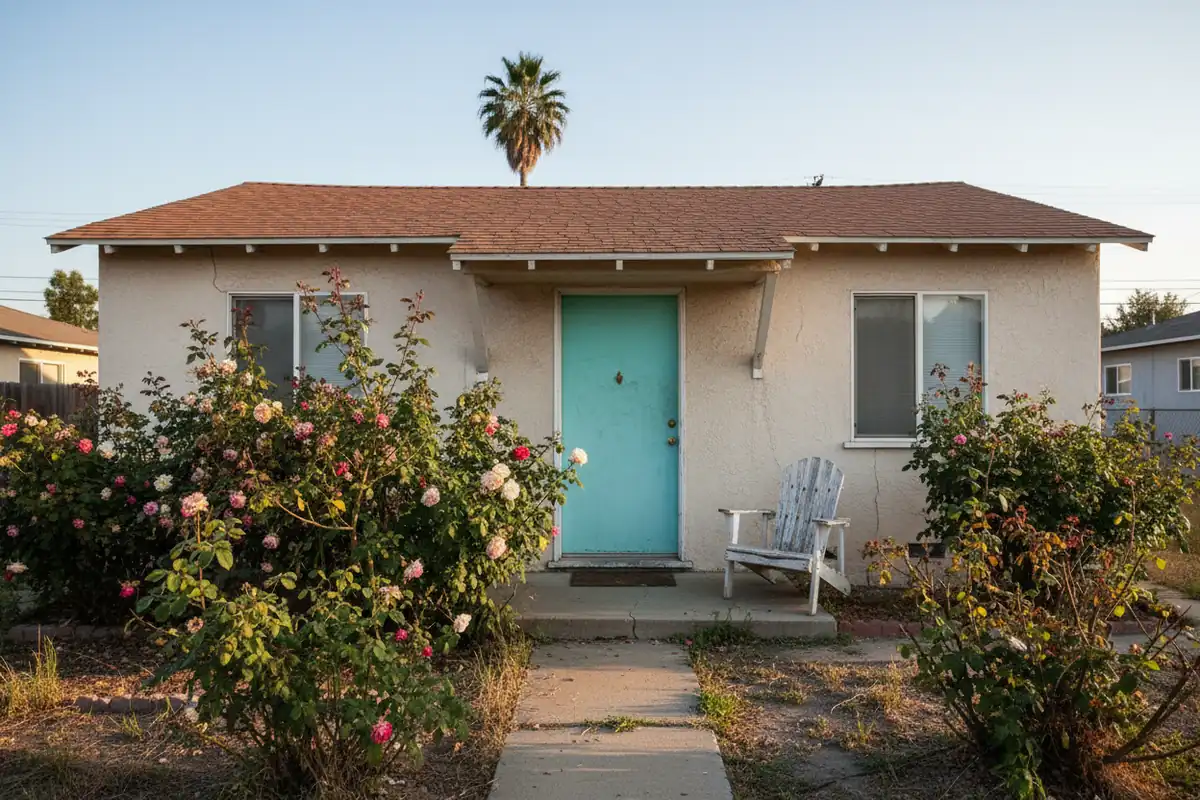
An inherited property appraisal is a written opinion of what a home was worth on a specific date, usually the date the owner died. Heirs, executors and trustees use it to document the federal income tax basis, to complete a probate inventory, and to give everyone involved the same value to work from.
On this page
Key Takeaways
- The value is fixed to a date. An inherited property appraisal looks back to the date of death. Under federal law, the basis of property acquired from a decedent is generally its fair market value at the date of death, with other values applying in specific cases, such as an election under the federal alternate valuation rules (26 U.S.C. § 1014(a)). "Basis" is the starting figure used to measure gain when the property is later sold.
- Probate has its own rule on who appraises. In a California probate, "the appraisal of property in the inventory shall be made by the personal representative, probate referee," or another independent appraiser as that chapter of the Probate Code provides (Probate Code section 8900). The personal representative is the executor or administrator the court appoints.
- An owner may give value. Under Evidence Code section 813, the value of property may be shown by qualified witnesses and also by the owner or the owner's spouse, among others.
- Property tax is a separate question. Proposition 19 changed California's parent-child and grandparent-grandchild property tax exclusions. The State Board of Equalization and the San Diego County Assessor publish the current rules.
- An estimate is not an appraisal. Online figures and market reviews serve other purposes, as described below.
When This Option Fits
The situations below share one need: a documented value tied to a specific past date, rather than a sense of today's market.
Probate administration. When an estate goes through probate in San Diego Superior Court, real property is listed in the inventory, and Probate Code section 8900 sets out who appraises it. The probate referee is a person appointed to appraise estate property. Some families also have a separate appraisal prepared to understand the property before decisions about it are made. More about how estates value real property appears in estate and probate appraisals.
Trust administration. A successor trustee of a revocable living trust often needs a date-of-death value for accounting to beneficiaries and for dividing or distributing the property. Under 26 U.S.C. § 1014(b), property in a trust the decedent could revoke is treated as acquired from the decedent for basis purposes.
Documenting basis before a later sale. An heir who sells years from now will need the date-of-death value to measure gain. Whether any tax is owed is a question for a CPA, an enrolled agent or a tax attorney.
Proposition 19 questions. When a home passes from parent to child or grandparent to grandchild, property tax treatment depends on the exclusion rules the Board of Equalization and the Assessor publish.
One heir buying out another. An independent appraisal gives co-heirs a documented value to discuss. If the co-owners cannot agree, that dispute is a matter for an attorney.
How It Works, Step by Step
1. Identify the effective date. The effective date is the date the value is measured as of. For most inherited property purposes it is the date of death.
2. Gather property records. Useful items include the assessor parcel number, the prior deed, any earlier appraisal, and records of improvements. The San Diego County Assessor's Office keeps parcel and assessment records.
3. Request an appraisal. The appraisal itself is prepared by an independent appraiser.
4. Inspection and research. The appraiser views the property and studies comparable sales, meaning homes similar in size, age, condition and location that sold around the effective date. In a retrospective appraisal, which values a home as of a past date, the appraiser relies on sales from around the date of death, not today's market. Changes made after the death, such as a new roof or a cleared-out garage, are separated from the condition on the effective date where the records allow.
5. The written report. The report states the effective date and the value conclusion. It also identifies the comparable sales relied on and explains the method used to reach the conclusion. In a probate, the inventory appraisal still follows Probate Code section 8900, described above.
Costs, Timing and Trade-offs
Appraisal fees vary, and this page states no figure. Several things shape what an appraiser quotes:
- the property's type and size, such as a condominium compared with a large lot, a multi-unit building or a home with an accessory unit;
- how hard it is to find good comparable sales, which is often harder for unusual homes or rural parcels;
- how far back the effective date reaches, since a date several years in the past calls for more research into older sales;
- the purpose of the report and any standard it has to meet for an estate tax return, a court or an accounting.
Timing follows the same pattern. A retrospective appraisal generally takes more work than a current-value appraisal because the appraiser reconstructs the market as it stood on the effective date. Access to the house, the availability of records and the complexity of the property all affect how long the work takes. This page gives no number of days.
The central trade-off is between documentation and convenience. An online estimate takes seconds and is free, but it was not built to answer a question about a past date. A written appraisal takes time and costs money, and it produces a report with a stated date, comparable sales and reasoning that a tax professional, an attorney, a trustee or co-heirs can review. For an executor answering to beneficiaries, that written trail is often the point of the report.
Options to Compare
Four tools produce a number for a home. Each answers a different question.
| Option | What it is | What it establishes |
|---|---|---|
| Automated valuation model (AVM) | A computer-generated estimate drawn from public records and recent sales | A quick reference point, not a documented value as of the date of death |
| Comparative market analysis (CMA) or broker price opinion | A review of nearby sales prepared by a real estate agent | A view of current market conditions, not a formal appraisal |
| Assessed value | The value the San Diego County Assessor uses to calculate property tax | A tax figure, not a measure of fair market value |
| Formal written appraisal | An appraiser's written opinion of value as of a stated date | A documented value with an effective date, comparables and reasoning |
An AVM can be useful for a first look, though online estimates often miss in San Diego County because they cannot see a home's condition. A comparative market analysis reflects today's market, which may not be the date that matters. Assessed value often differs sharply from market value, especially for a home held for many years.
In a probate, Probate Code section 8900 decides who appraises the inventory regardless of which tool the family used informally, and Evidence Code section 813 permits an owner to offer an opinion of value. Comparing what each option establishes against what your purpose requires is how you tell which one fits. An attorney or a tax professional can say which one a particular estate, trust or return calls for.
What to Have Ready
An appraiser's work goes more smoothly when the basic records are gathered before the request.
- Date of death. The exact date appears on the death certificate.
- Assessor parcel number (APN). This number appears on a property tax bill and in the San Diego County Assessor's records.
- Prior deed. A grant deed or other deed shows how title was held and who the owner of record was. The owner of record is the person named on the recorded deed.
- Any earlier appraisal. This includes an appraisal done for a refinance or for a purchase.
- Records of improvements. Permits, contractor invoices, or building department records from the City or County of San Diego can document work done on the home.
- Trust or probate papers. For a trust, the trust document and the successor trustee's acceptance are useful. For a probate, the court papers appointing the personal representative show that person's authority to act for the estate.
These records apply to the house and land, which are real property. Furniture, vehicles and other personal property are valued separately.
A natural place to begin is the death certificate and the most recent property tax bill. Together they give the effective date and the parcel number. Another useful question for the estate's attorney or tax professional is which date and purpose the appraisal has to serve.
Local Context: San Diego County
The San Diego County Assessor's Office sets assessed values for property tax and handles claims for the parent-child and grandparent-grandchild exclusions that Proposition 19 reshaped. When a parent's home in San Diego County passes to a child, the Assessor applies the exclusion rules as the State Board of Equalization and the Assessor publish them. The date-of-death value can be part of that conversation, and a claim is filed with the Assessor rather than resolved by an appraisal alone.
Probate matters in San Diego County are filed in San Diego Superior Court. The inventory appraisal there follows Probate Code section 8900. The personal representative and the estate's attorney can say what the court expects in a given case.
Inherited homes in San Diego County range from coastal homes in La Jolla, Encinitas and Oceanside to inland houses in Escondido, El Cajon and Santee, and from older neighborhoods in Chula Vista and National City to newer tracts in Poway. A market that varies this much from one San Diego community to the next is one reason a countywide average or an online figure says little about one house on one date. A local comparable-sales search, done as of the date of death, is what a single-family home appraisal for an estate is built on.
Take the next step
Ready to take the next step with your property?
Tell us about the property and why you need an appraisal, so an independent appraiser can confirm the right scope of work.
How it works
- The propertyIts address and its type.
- The purposeA sale, an estate or probate, a divorce, a trust, tax or a legal matter.
- Your timelineWhen the appraisal is needed.
Take the next step
How we work
- Every request is reviewed by a person. Nothing on this site calculates a value automatically.
- Appraisals are prepared by independent, state-licensed or certified appraisers, never by this website.
- Estimates and cash offers are clearly labeled — never presented as appraisals.
- A request does not commit you to anything.
Frequently asked questions
How do you determine the basis of an inherited house?
Under 26 U.S.C. § 1014(a), the basis is generally the home's fair market value at the date of death, with other values applying in specific cases, such as an alternate valuation election. A written appraisal with that effective date documents the figure. A CPA, an enrolled agent or a tax attorney can say how the rule applies to your situation.
What is the date-of-death appraisal used for?
A date-of-death appraisal documents the home's fair market value on the day the owner died. Heirs use it for federal basis, and trustees use it for accounting and distributions. In a probate, it can inform the estate inventory, which is appraised as Probate Code section 8900 provides. Co-heirs can also use it as a shared reference.
Does Proposition 19 affect inherited property in San Diego County?
Yes. Proposition 19 changed the parent-child and grandparent-grandchild property tax exclusions in California. The State Board of Equalization and the San Diego County Assessor publish the current rules, and claims are filed with the Assessor. The facts that matter include who inherited the home and how they use it.
What not to tell an appraiser?
Nothing factual needs to be held back. Accurate details about the home's condition, its improvements and the date of death support an accurate report. The appraiser bases the conclusion on comparable sales and the property's characteristics, not on a figure an heir suggests.
Is a formal appraisal required for probate in California?
Probate Code section 8900 provides that the inventory is appraised by the personal representative, the probate referee, or another independent appraiser as that chapter of the Probate Code provides. Evidence Code section 813 also lets an owner give value. The estate's attorney can say what the court expects in a particular case.
How does an inherited property appraisal differ from an online home value estimate?
An online estimate comes from a computer model that draws on public records. It does not document a value as of a specific past date. A written appraisal states its effective date, the comparable sales it relied on and its reasoning, which is what an estate, a trust or a tax professional usually needs.