Skip to content
San DiegoHome Appraisal & Valuation

California

Condo Valuation

Updated November 17, 2026

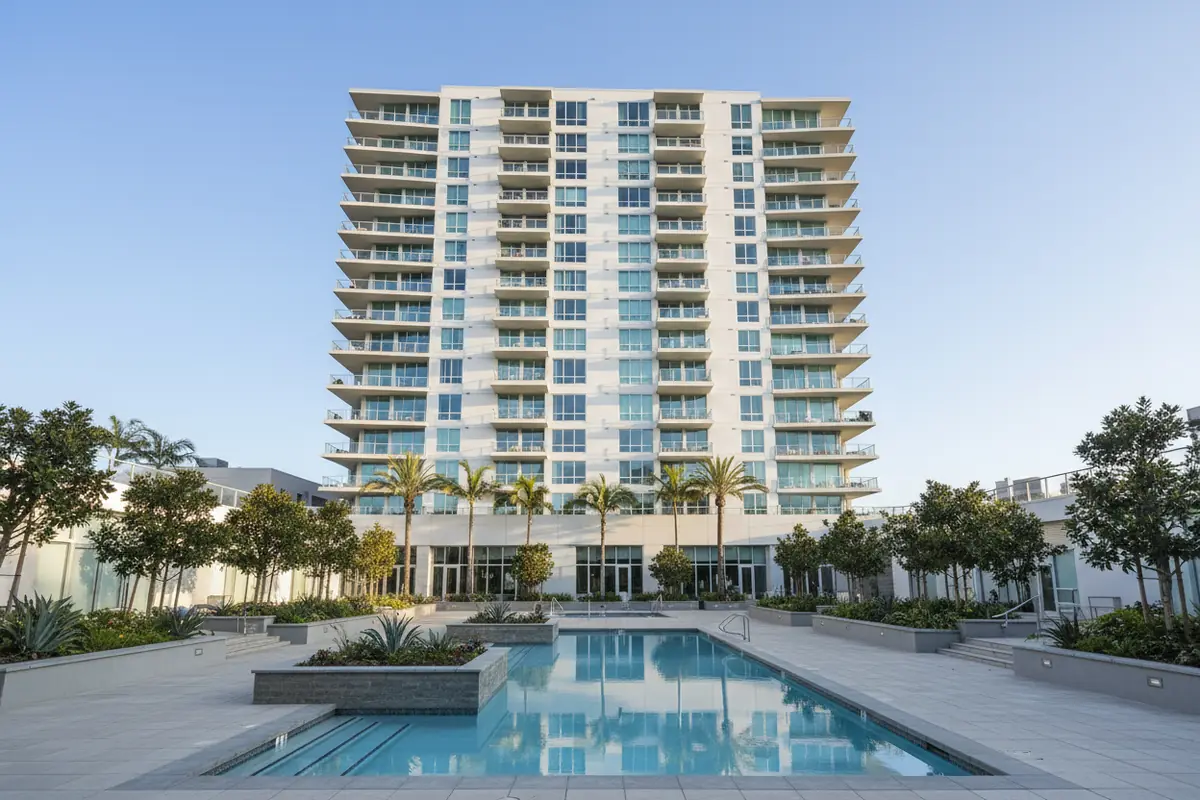
Stacked glass balconies on a condo building, where floor level and dues sway value.
Immediate answer

A condo valuation is a reviewed estimate of what a condominium unit would likely sell for on the open market. It compares recent sales of similar units, then accounts for the homeowners association, the building and the unit itself. It is not an appraisal and not an instant online number. Lenders, courts and tax returns usually call for a formal appraisal.

On this page
  1. Key Takeaways
  2. When This Option Fits
  3. How It Works, Step by Step
  4. Why HOA Finances Reach the Lender
  5. Costs, Timing and Trade-offs
  6. Options to Compare
  7. What to Have Ready
  8. Local Context: San Diego County Condo Market
  9. Frequently asked questions
  10. Sources

You may own a condo in San Diego County, or you may be handling one for a parent, an estate, a trust or a marriage that is ending, and someone needs to know what it is worth. The question may come from a planned sale, a refinance, a settlement conversation, a probate file or a property tax bill that looks wrong. A condo is harder to price than a house on its own lot, because the association's finances and the building's condition can matter as much as the kitchen.

This page walks through what a condo valuation looks at, when it fits and when it does not, and how it compares with the other ways of putting a number on a unit.

Key Takeaways

  • Condos sell on more than square footage. The health of the homeowners association, or HOA, shapes value, along with the building's age and upkeep and the unit's floor, view, parking and condition.
  • San Diego County is not one condo market. A high-rise unit Downtown, a beach-area condo in Pacific Beach, a townhome in Chula Vista and a garden-style unit in Santee each draw on different buyers and different comparable sales.
  • The reason for the number shapes which tool fits. A sale, a refinance, a divorce, an estate, a probate case and a property tax question can each call for a different one.
  • HOA finances reach a buyer's lender, not just the buyer. The association's condition can affect whether a lender will finance a unit in the complex, which in turn affects the pool of buyers.

When This Option Fits

A local market review, also called a comparative market analysis or CMA, usually fits when an owner needs a grounded sense of value to make a decision, rather than a document someone else must formally accept. That covers several common situations:

  • Pricing before a sale. It helps set expectations before a listing conversation. The pre-listing home valuation process covers the same ground for any home.
  • Estate planning and trust administration. A trustee or family member can use it to understand what a unit is worth as planning begins.
  • Early divorce discussions. Spouses can use it to talk about the home before any formal valuation date is set.
  • A property tax question. An owner can use it to compare market conditions with the assessed value on a tax bill.
  • General ownership decisions. These include keeping, renting or selling the unit.

A formal appraisal, not a market review, is what is typically required in other settings. Those include lender-ordered financing, probate court filings, an estate tax return filed with the IRS, and formal legal proceedings. The condominium appraisal process and the rules for a divorce real estate appraisal follow their own standards.

A market review is not written for contested litigation, lender underwriting or a court-ordered valuation. Where spouses, heirs or co-owners are in a dispute, or a case has been filed, that is a different matter and one for an attorney.

How It Works, Step by Step

A review starts with the unit itself, so the features that make one condo different from the one next door are counted from the beginning.

  1. Unit-level details. These include square footage, floor level, view, interior condition, parking and storage. A top-floor unit with an ocean view in La Jolla and a ground-floor unit facing the parking area in the same complex can sell very differently. The clearest evidence for a floor or view difference usually comes from comparing sales of otherwise similar units within the same complex.
  2. HOA factors. The review looks at the association's core finances and risks: monthly dues, the reserve fund, any pending special assessment, any litigation history and insurance coverage. The reserve fund is the money the HOA saves for major repairs such as roofs and elevators. A special assessment is an extra charge to owners on top of regular dues.
  3. Building and complex factors. These include the building's age, its construction type, its amenities and the share of units lived in by their owners rather than rented out.
  4. Comparable sales. Recent sales of units in the same complex are usually the strongest evidence of value. Sales in nearby similar complexes fill gaps where the complex itself has few sales. Differences in size, floor, condition and parking are then accounted for. The comparative market analysis process explains this method in more detail.
  5. The written review. The result is a written local market review or CMA, not an appraisal report and not an automated estimate.

Why HOA Finances Reach the Lender

With a condo, the buyer is not the only one looking closely at the association. A buyer's lender also looks at the complex as a whole, because the loan depends on the building being sound and the association being able to pay for upkeep.

The HOA factors from the step-by-step list above each play a part in that look:

  • Reserves. A reserve fund that looks thin relative to the repairs the building will face raises the chance of a future special assessment. A recent reserve study is the usual document showing how the fund compares with expected repair costs.
  • Special assessments and litigation. A pending assessment or an active lawsuit against the association can draw extra scrutiny from a lender.
  • Insurance. A change in the association's insurance coverage is something buyers and lenders pay attention to.
  • Owner-occupancy mix. The share of units lived in by owners rather than rented out is part of how a complex is viewed.

Some loan programs, such as FHA-insured loans or loans sold to Fannie Mae, review the complex itself, a step often called condo project approval. Whether a given complex meets a program's standards is a question for the lender involved.

When these factors make financing in a complex harder, fewer buyers can purchase there, and that can weigh on value even when the unit itself is in good condition. A market review accounts for this as part of the HOA picture. Whether a particular lender will finance a unit remains that lender's call.

Costs, Timing and Trade-offs

A complicated HOA situation takes more work to account for, such as a pending special assessment, an insurance change or a lawsuit against the association. A large complex with regular sales gives a clear set of comparables. A small building with few recent sales, or a unit that is unusual for its area, takes more searching. The appraisal for unique homes process describes a similar problem for houses with few comparable sales.

The central trade-off is this. A local market review is less formal than an appraisal and usually involves less process, which makes it practical for planning. It does not carry the weight a lender, a court or the IRS requires. If one of those parties will rely on the number, a market review does not replace the appraisal they ask for.

A formal appraisal ordered by a lender or required in a court matter is a separate engagement with its own cost structure. The factors that set that fee are described under home appraisal cost. Some owners end up with both: a review for early planning and an appraisal later for the formal step.

Options to Compare

Four tools are commonly used to put a number on a San Diego County condo. Each has real strengths and real limits.

OptionWhat it offersWhere it falls short
Automated valuation model (online estimate)Instant and free to seeCannot see HOA health, unit condition, floor level or building issues, and accuracy for condos varies widely
CMA from a real estate agentPrepared by a real estate agent with local sales knowledge, often offered as part of a listing conversationTied to a possible sales relationship, and not an appraisal
Local market review requested through this siteSeparate from any listing relationship, and covers HOA and building factorsNot an appraisal, and not accepted where a lender or court needs one
AppraisalA formal opinion of value from a credentialed appraiser, used by lenders, courts and the IRSInvolves more process and is tied to a specific purpose and date

For a condo, the online estimate gives a starting point and little more. Two units with the same size and zip code can differ sharply on dues, reserves and view. An appraisal is prepared by an appraiser who holds a California credential overseen by the California Bureau of Real Estate Appraisers. The home valuation overview places all four side by side for houses as well as condos.

What to Have Ready

A review is only as good as the details behind it. These documents tend to produce a more accurate result:

  • HOA documents. These include the CC&Rs, which are the recorded rules that govern the complex, the current monthly dues, the most recent reserve study or reserve fund balance if available, and any notice of a pending special assessment.
  • Unit details. Square footage can come from the deed or tax records. Also useful are the floor level, the number and type of parking spaces, and any storage unit.
  • Recent improvements. Kitchen, bath, flooring or heating and cooling work, with approximate dates.
  • Title or ownership documents. These help when the valuation is for an estate, a probate matter, a trust or a divorce, since they show who holds title.
  • Earlier reports. Any prior appraisal or CMA, if one exists.

Missing documents do not stop a review. They do leave more of the HOA picture as an open question, and that usually narrows how firm the estimate can be.

Local Context: San Diego County Condo Market

Condos are common across San Diego County, but the buyers and comparables differ from one area to the next. Downtown San Diego and Mission Valley have many mid-rise and high-rise buildings with shared amenities. Hillcrest and North Park mix older small complexes with newer projects. Pacific Beach, La Jolla and Coronado draw buyers for coastal living, where view and distance to the water can dominate. In North County, Carlsbad and Encinitas have many townhome-style communities. Chula Vista and Santee offer newer planned communities and older garden-style complexes.

The same unit factors play out differently in each area. A view premium in La Jolla or Coronado may count for little in Santee. Parking can matter more in Hillcrest and North Park than in Chula Vista. A Downtown high-rise's elevator and amenity costs show up in its dues.

HOA insurance and reserve adequacy have become significant factors in California condo markets, and the lender attention described above can affect value in Carlsbad, Encinitas, Mission Valley or Pacific Beach alike.

The San Diego County Assessor's assessed value is not market value. The assessed value is the basis for property tax under California's property tax rules. Market value reflects what a buyer would pay today. The two can differ by a wide margin.

The HOA's most recent reserve study and dues statement, along with the assessed value shown on the county tax bill, help frame the questions any valuation will need to answer.
Take the next step

Ready to take the next step with your property?

Answer a few questions and receive a reviewed market value estimate for your property.

How it works

  1. The propertyIts address, type, size, bedrooms and bathrooms.
  2. Its conditionFrom recently updated to needing significant work.
  3. Your reasonCurious, selling, refinancing or planning an estate.

How we work

  • Every request is reviewed by a person. Nothing on this site calculates a value automatically.
  • Appraisals are prepared by independent, state-licensed or certified appraisers, never by this website.
  • Estimates and cash offers are clearly labeled — never presented as appraisals.
  • A request does not commit you to anything.

Frequently asked questions

Does a condo go up in value?

It can, but nothing assures it. A San Diego County condo's value over time depends on the unit's own features and condition, the HOA's financial health and the local submarket. Underfunded reserves, a pending special assessment or insurance trouble can hold a unit's value down even when nearby prices are rising.

What is the most accurate way to estimate a condo's value?

For formal purposes, an appraisal is the most defensible method. For planning or pricing, a local market review that accounts for HOA factors, comparable unit sales and building condition usually reflects a condo better than an automated estimate, which cannot see the variables that set condos apart.

How is a condo's value calculated?

Recent sales of similar units, first in the same complex and then in comparable nearby complexes, are the starting point. Differences in size, floor level, condition, parking and amenities are then accounted for. HOA health is factored in because it shapes a buyer's monthly costs and financing.

Who pays for a condo valuation?

That depends on who orders the valuation and why. In a lending, probate or divorce matter, the party or estate responsible depends on the loan terms, the court process or an agreement between the parties, and an attorney or the lender can say how that applies. For a market review, cost depends on scope.

How does a condo appraisal differ from a home value estimate?

Lenders, courts and the IRS rely on an appraisal from a credentialed appraiser. An online estimate comes from software and misses HOA and unit details. A local market review sits between the two: more thorough than an online estimate, but not an appraisal.

What HOA factors affect a condo's value in San Diego County?

The main ones are reserve fund adequacy, monthly dues, any pending special assessment, active litigation and the association's insurance coverage. Each affects what a buyer pays and whether a buyer's lender will finance the unit, as described in the section on why HOA finances reach the lender. In San Diego County, HOA insurance has become a notable factor.

Is the San Diego County Assessor's value the same as market value?

No. The Assessor's assessed value is used to calculate property tax under California's property tax rules. Market value is what a willing buyer would pay a willing seller today, and the two can differ substantially. Questions about an assessed value go to the San Diego County Assessor's office.

Sources

  1. 01California Bureau of Real Estate Appraisers · brea.ca.gov
  2. 02Consumer Financial Protection Bureau · consumerfinance.gov
  3. 03San Diego County Assessor · arcc.sandiegocounty.gov