Most people searching for a probate appraisal did not plan to become an executor, trustee or heir. A parent, a spouse or a relative has died, and a house in San Diego County or elsewhere in Southern California is now part of an estate. Questions are coming from the court, the family and perhaps a buyer: what was the property worth on the date of death, who puts a number on it, and when is that number due? This page walks through how California law answers those questions, in the order they usually come up.
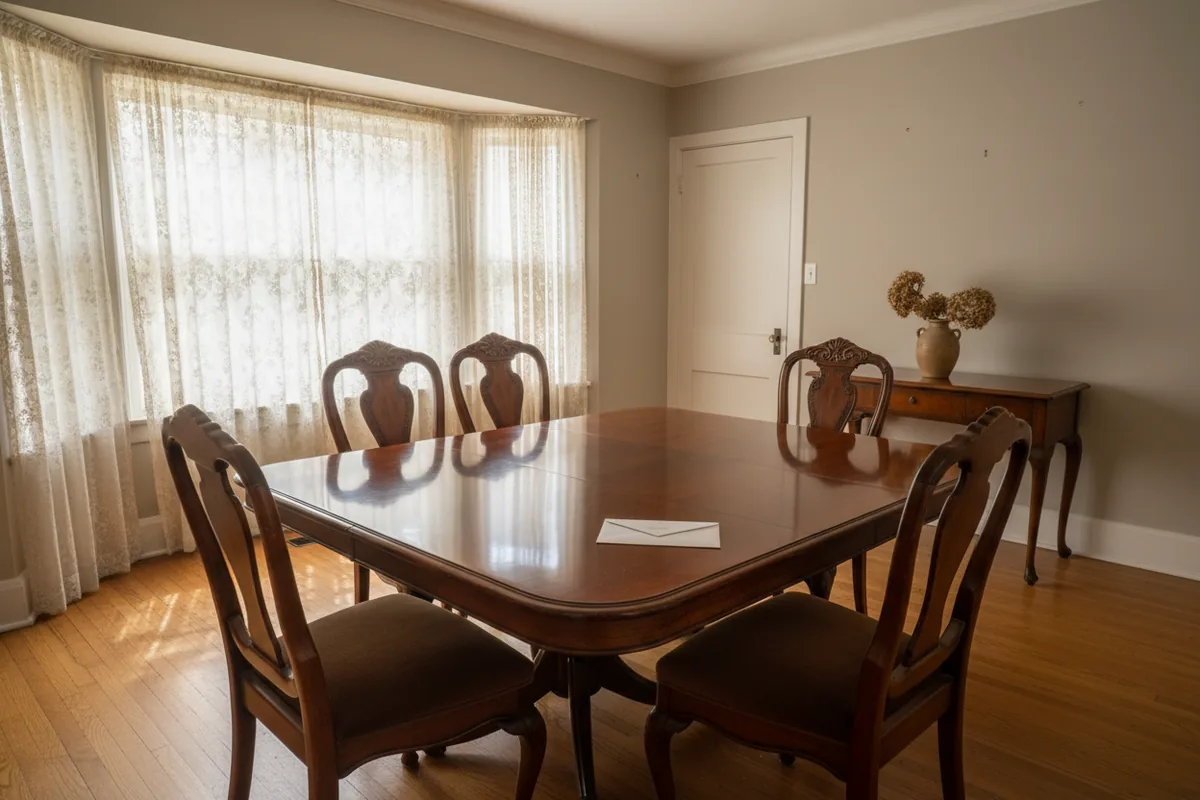
A probate real estate appraisal is the written opinion of value for a house or land in a California estate. In a court probate, the personal representative files an inventory and appraisal with the court, and a court-designated probate referee generally appraises the property the personal representative does not. That value can later matter for a court-confirmed sale and for an heir's tax basis.
On this page
- Key Takeaways
- When an Estate or Probate Appraisal Is Needed
- How the Probate Inventory and Appraisal Works, Step by Step
- The Date-of-Death Value and Why It Matters for Heirs
- Court Confirmation of a Probate Sale: The Appraisal Requirement
- Options to Compare
- What an Executor or Heir Gathers Before an Appraisal
- Local Context: San Diego County and Southern California
- Frequently asked questions
- Sources
Key Takeaways
- The appraisal is part of a court filing, not a courtesy. In a probate, the value of the house goes into a document the court keeps on file, under a deadline described below.
- Two people can share the work. The personal representative and a probate referee generally divide the appraising between them.
- A sale has its own appraisal test. The value on the inventory is not automatically the value that counts when a buyer's offer goes before the court.
- The date of death matters beyond probate. The same date-of-death value often becomes the starting point an heir uses for federal income tax purposes.
- A referee is in a different statutory category from other appraisers. California's appraiser law treats a probate referee separately unless the transaction is federally related.
How each rule applies depends on the facts of the estate and the law that applies to it.
When an Estate or Probate Appraisal Is Needed
Executors often wonder first whether anyone has to appraise anything at all. Early on, the answer is often no. The California Courts' self-help page on Inventory and estimate property value says a person listing what the decedent owned does not need to have anything appraised at that point and can give an estimate, though a formal appraisal may be needed if the matter goes to court.
A formal appraisal usually comes into the picture in these situations:
- A court probate. The inventory has to be filed together with an appraisal, as the next section explains.
- A sale the court must confirm. A private sale of real property generally has an appraisal condition attached.
- An heir's tax basis. The date-of-death fair market value is generally the federal starting point.
- A trust administration. The State Controller's page says a probate referee's service is also available for non-probate trust administration.
Contested wills and trust litigation are a different subject that an attorney handles. In short, the reason for the appraisal decides which date it uses and who prepares it.
How the Probate Inventory and Appraisal Works, Step by Step
The personal representative is the executor named in a will or the administrator the court appoints. Under Probate Code section 8800, that person files with the court clerk an inventory of estate property together with an appraisal, combined in a single document. Letters are the court's document giving the personal representative authority to act.
- Filing the inventory and appraisal. Under Probate Code section 8800, the filing is due no later than four months after letters are first issued to a general personal representative, and the court may allow further time that is reasonable for the particular case. Partial inventories may be filed where appropriate, but all must be filed before the allowed time ends.
- Filing the ownership certification. At the same time, Probate Code section 8800 requires a certification either that the decedent owned no California real property at death or that a change in ownership statement was filed with the county recorder or assessor of each California county where the decedent owned property.
- Delivering the inventory to the referee. Except as otherwise provided by statute, Probate Code section 8902 has the personal representative deliver the inventory and supporting data to the probate referee the court designates. The referee then appraises all property other than what the personal representative appraises.
- The referee comes from the county's appointed group. Under Probate Code section 8920, the designated referee is among those the Controller appoints for the county; if no one is available, or the court does not designate a person appointed for the county, the court may designate a referee from another county.
For the executor, this means the house is usually valued by the referee, not by the family. The practical next question is what supporting data the referee will need about the property.
The Date-of-Death Value and Why It Matters for Heirs
Heirs who expect to sell a parent's San Diego home often ask why everyone keeps mentioning the date of death. The reason is basis, the starting figure used to measure gain or loss when property is later sold. Under 26 U.S.C. § 1014(a)(1), the basis of property acquired from a decedent is generally its fair market value at the date of the decedent's death. Other paragraphs of 26 U.S.C. § 1014(a) apply instead when an alternate valuation or special-use election is made, or a conservation easement exclusion applies.
The IRS's Publication 551 (12/2025), Basis of Assets says the same: basis of inherited property is generally the fair market value at the date of death, or on the alternate valuation date if the personal representative chooses alternate valuation. It also notes that California is a community property state and that, when a spouse dies, the whole community property generally takes a new basis if at least half its value is includible in the decedent's gross estate.
A retrospective appraisal is an appraisal that gives a value as of a past date, such as the date of death, rather than today. That kind of appraisal is common when the appraisal is ordered months or years after death.
What this means for an heir is that a documented date-of-death value can matter long after probate closes. Whether a particular sale produces tax is a question for a CPA, an enrolled agent or a tax attorney. Questions about property-tax reassessment belong with the San Diego County Assessor's office.
Court Confirmation of a Probate Sale: The Appraisal Requirement
Personal representatives selling an estate house often need the court's approval of the sale. A confirmation hearing is the court hearing where a judge reviews the sale and decides whether to approve it. Probate Code section 10309 states its rule subject to an exception found in another provision of the Probate Code, so the test below is the general rule rather than an absolute one. Under that general rule, a private sale of real property is confirmed only if:
- the property was appraised no more than one year before the confirmation hearing;
- the appraisal's valuation date is also no more than one year before the hearing; and
- the offer is at least 90 percent of the appraised value.
Probate Code section 10309 also allows a new appraisal at any time before the sale or its confirmation where the property was never appraised, the appraisal or its valuation date is more than one year before the hearing, or the court is satisfied the latest appraisal is too high or too low. A new appraisal need not be made by a referee if the original was made by someone other than a referee.
For the seller, an inventory appraisal from early in the case may be too old by the time a buyer appears. The thing to weigh is how the appraisal's date lines up with when a hearing is likely to be set.
Options to Compare
Three kinds of valuation usually come up in a California estate, and each has a different job.
| Option | What it is for | Its limits |
|---|---|---|
| Probate referee appraisal | Generally, appraising inventory property the personal representative does not appraise in a court probate (Probate Code section 8902) | Tied to the probate case and to the referee selection described above (Probate Code section 8920) |
| Independent appraisal | Documenting a date-of-death value, supporting a trust distribution, or a new appraisal for a confirmed sale where Probate Code section 10309 allows one | Answers the question and date it was ordered for |
| Informal estimate or comparative market analysis | A rough sense of market value for planning, such as a home value review | Not an appraisal and not a substitute for one in a court or tax setting |
The central trade-off among these is documentation. A formal appraisal produces a written, dated value that can be filed with a court or kept with tax records. An informal estimate is quicker to get, but it does not serve the same legal purpose. Which matters more depends on whether the estate is headed to court, to a sale, or to a quiet distribution.
The effort an appraisal involves also varies. A single house differs from several parcels, land, or a property with an unusual use. A retrospective value as of a past date asks the appraiser to reconstruct earlier market conditions. Property spread across San Diego County and neighboring Southern California counties can mean more than one county's records. This page gives no fee figure; the appraiser or referee involved is the source for that.
One more distinction: under Business and Professions Code section 11302, California's real estate appraiser law does not apply to a probate referee acting under the Probate Code's referee provisions unless the appraised transaction is federally related. In plain terms, a referee works under a separate framework. Residential appraisals outside an estate, and general home values in San Diego, are separate subjects.
What an Executor or Heir Gathers Before an Appraisal
Paperwork tends to come first. A practical list, which is information rather than legal advice:
- Letters. These show the personal representative's authority in a court probate.
- The exact date of death. A date-of-death or retrospective value is tied to it.
- The property address and assessor's parcel number. The parcel number appears on San Diego County property tax bills.
- The deed. The California Courts self-help page says deeds are public records at the County Recorder's Office in the county where the property is located, and that they show how title was held, such as joint tenancy, community property or in a trust's name.
- Prior appraisals, title reports and tax bills on hand.
- Trust documents, if the property is held in trust.
- Any loan on the property. The self-help page notes that what the decedent owed should be listed along with the value.
An attorney can say what a particular estate's filings require.
Local Context: San Diego County and Southern California
San Diego County estates that go through court probate are handled by the San Diego Superior Court, the county's trial court. That is where the inventory and appraisal is filed and where a confirmation hearing for a private sale is held.
The State Controller's Probate Referees page says the Controller appoints referees to appraise all types of estate assets and appoints at least one referee per county. The page describes a referee's service as required for court resolution of an estate; that description reflects the usual practice, and the Probate Code allows a court to waive referee appraisal in certain circumstances.
The San Diego County Assessor is the office for reassessment after a death, including Proposition 19's parent-child rules. The Assessor's office publishes the current rules and figures. Estates with property in Riverside, Orange or Imperial County involve each county's own assessor and recorder.
Take the next step
Ready to take the next step with your property?
Tell us about the property and why you need an appraisal, so an independent appraiser can confirm the right scope of work.
How it works
- The propertyIts address and its type.
- The purposeA sale, an estate or probate, a divorce, a trust, tax or a legal matter.
- Your timelineWhen the appraisal is needed.
Take the next step
How we work
- Every request is reviewed by a person. Nothing on this site calculates a value automatically.
- Appraisals are prepared by independent, state-licensed or certified appraisers, never by this website.
- Estimates and cash offers are clearly labeled — never presented as appraisals.
- A request does not commit you to anything.
Frequently asked questions
What does a probate real estate appraisal include?
It is a written opinion of the property's value as of a stated date. Business and Professions Code section 11302 defines an appraisal as developing an opinion of value for real property. In a court probate, that value appears in the combined inventory and appraisal document filed with the court.
What is the probate referee's role in appraising real property?
The referee generally values whatever the personal representative does not, and in practice that often includes the house. The State Controller's page adds that candidates must pass a state test on probate procedures and appraisal principles and complete continuing education each year.
Why does the date-of-death value matter for an heir?
It is generally the heir's starting basis for federal income tax purposes. Publication 551 notes that when an estate must file a federal estate tax return, beneficiaries generally receive a Schedule A (Form 8971) reporting the estate tax value, and certain beneficiaries must use that value. A tax professional can say how this applies.
What appraisal is required before a court confirms a probate sale?
The key question is the age of the appraisal measured against the hearing date, not the filing date. The general confirmation test in Probate Code section 10309, which is subject to a stated exception, looks at both the appraisal and its valuation date relative to the hearing, and it compares the offer to that appraised value. When the inventory appraisal is too old to qualify, the same section allows a new one before the sale or its confirmation.
What is a retrospective appraisal and when is one needed?
It values property as of an earlier date instead of today. Estates and trusts use one when the appraisal is ordered well after the death but the value needed is the date-of-death value, as the inventory and the federal basis rule both look back to that date.
Does California's appraiser law apply to a probate referee?
Generally not. Business and Professions Code section 11302 says that part of the code does not apply to a probate referee acting under the Probate Code's referee provisions unless the appraised transaction is federally related. A referee is instead appointed by the State Controller.
How does Proposition 19 affect property inherited through a San Diego County estate?
The San Diego County Assessor's office is the source for how Proposition 19's parent-child rules apply. On the probate side, Probate Code section 8800 requires a certification about the change in ownership statement filed with the recorder or assessor.