If you own a home in San Diego County and an appraisal is coming up, you likely have a reason that cannot wait for a guess. The house may be going on the market. A lender may need a value before a refinance. A divorce may require the home's worth to be fixed for dividing property. You may be an executor or trustee who needs a value as of a parent's date of death. In each case the visit can feel like a test you did not write, and it is hard to know what the appraiser is actually noticing. This guide walks through what an appraiser examines, how that becomes a number, and where your part begins and ends.
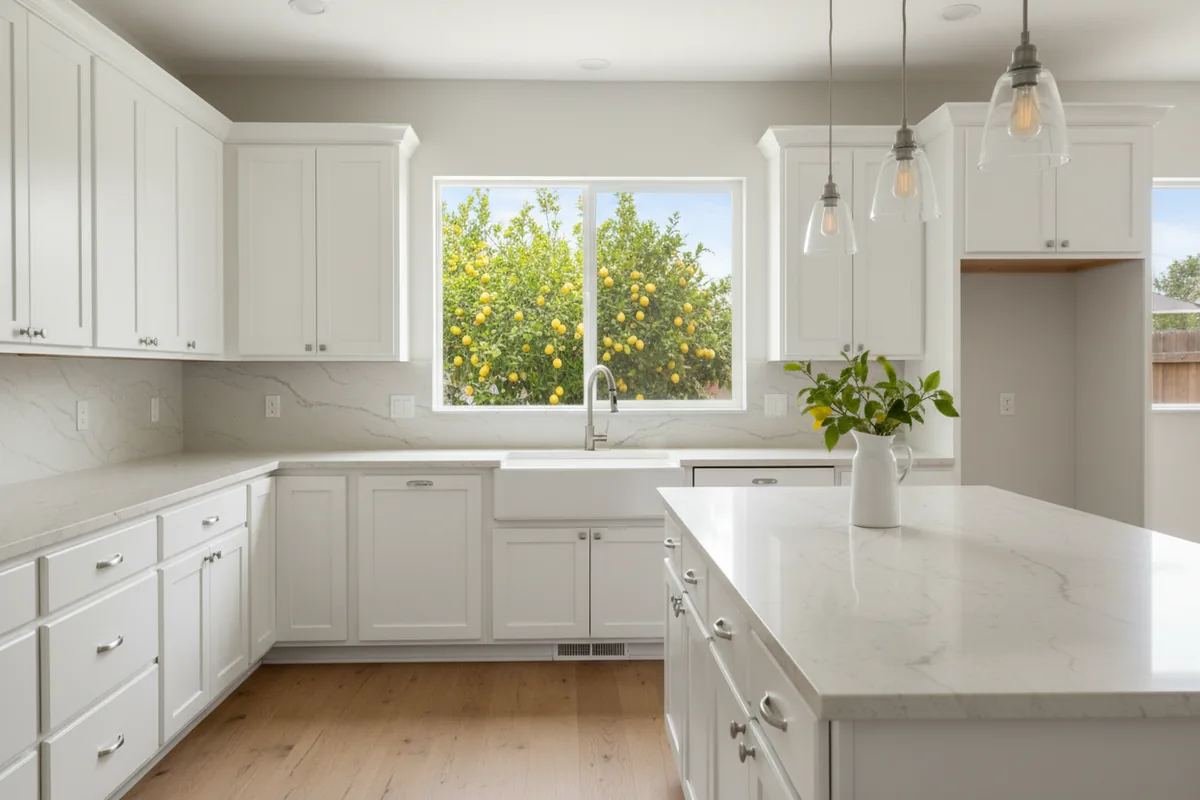
A home appraiser looks at the house and its land: the finished living area, the bedrooms and bathrooms, the condition and age of the kitchen, baths, roof and systems, and features such as a pool, a garage, solar panels or an accessory dwelling unit. The appraiser then compares the home with recent nearby sales to reach an opinion of market value.
On this page
What It Means for Owners
An appraisal is an appraiser's independent, written opinion of a property's market value as of a specific date. It is not a home value estimate, a comparative market analysis or an assessed value, even though all four put a number on a house.
Market value means the price a willing buyer and a willing seller would agree on, with neither one forced to act. Assessed value is different. It is the figure the San Diego County Assessor uses to figure property tax under Proposition 13, California's property-tax system. That figure follows its own rules and often sits apart from what the home would sell for.
In San Diego County, these are the usual reasons an appraisal is needed:
- a purchase or sale
- a mortgage refinance
- dividing property in a divorce
- administering an estate or a probate case
- administering a trust
- appealing a property-tax assessment
The work has two parts. First, the appraiser visits the property. They measure it, photograph it and note its condition. Then they research comparable sales from their desk. The visit and the research together produce the written report. Knowing what each part covers helps you see which parts the house itself speaks to and which parts depend on the market around it.
Who It Affects
These people commonly need an appraisal result:
- the owner of record (the person or people named on the recorded deed)
- a co-owner
- an heir
- the executor or administrator of an estate
- a trustee
- a surviving spouse
- a divorcing spouse
The appraiser is one of several people who may put a number on a home, and their roles are not the same. The assessor is the county tax official who sets assessed value. A real estate agent may prepare a comparative market analysis to suggest a listing price. A lender orders an appraisal to decide whether to make a loan. The appraiser forms the value opinion itself, under professional standards and state oversight.
In a divorce, a probate case or a trust matter, an attorney or a court may be the one who orders the appraisal. Sometimes the parties disagree about value in one of those proceedings. A contested valuation question like that is handled by an attorney.
Location matters across the county. Properties range from coastal neighborhoods to inland valleys, from compact urban lots to large semi-rural parcels. An appraiser looks at local market conditions, lot size, views and how close the home is to the coast.
What an Appraiser Examines: The Physical Property
Gross living area comes first. This is the finished, above-grade square footage, and the appraiser measures it from the outside or inside. A garage, an unfinished basement or a below-grade room typically does not count toward it, even when it is useful space. Bedrooms and bathrooms are counted next. A bedroom is generally a finished room meant for sleeping. A bathroom is counted as full or partial depending on its fixtures.
The appraiser then gives the home a condition rating. Lender appraisal forms use a scale. At one end is a new or nearly new home with no wear to speak of. At the other end is a home with damage or deferred maintenance serious enough to affect its soundness. Deferred maintenance means repairs that have been put off. Most homes fall somewhere in between, and updates, wear and put-off repairs decide where.
Along the way, the appraiser notes:
- Kitchen and bathrooms. The age and quality of fixtures, countertops and cabinetry.
- Roof, foundation and structure. Visible condition only. An appraiser is not a home inspector, but they note obvious problems.
- Mechanical systems. The apparent condition and age of heating, cooling, plumbing and electrical. This is not a technical inspection.
- Interior finishes. The condition and quality of flooring, walls, ceilings and windows.
- Closets and storage. These are photographed to show condition and layout.
- Parking. The garage or carport, its size, and whether it is attached or detached.
- Amenities. A pool, a spa, an accessory dwelling unit (a second living unit on the lot), solar panels or upgraded finishes.
Each amenity is compared against comparable sales. How a home value with a pool or a home value with solar turns out depends on whether nearby buyers paid more for those features.
San Diego County adds its own local factors. These include an ocean or bay view, a canyon or hillside lot, distance to the coast, and a lot that is larger or smaller than others nearby.
What an Appraiser Examines: The Site and Neighborhood
The lot is studied as closely as the house. The appraiser records its size, shape, slope and how much of it can actually be used. A flat, usable yard and a steep slope of the same size can mean different things to a buyer.
Zoning tells the appraiser what the parcel may be used for. Zoning is the local rule that sets allowed uses, such as single-family housing. A home whose current use no longer matches its zoning is called a non-conforming use, and the appraiser notes it.
Where the home sits within the neighborhood also counts. The appraiser looks at things such as:
- a corner lot or a cul-de-sac
- a busy street
- nearby commercial uses
- nearby schools and parks
The appraiser also reports the neighborhood trend, meaning whether values in the immediate area appear stable, rising or declining.
Several settings in San Diego County are noted in the report and can affect value. These include a coastal versus an inland location, a fire-hazard severity zone designation, a flood zone, and a hillside or canyon setting. For a canyon-edge or hillside home, the setting can count both for the property and against it. The view may draw buyers, while the hazard designation may make some of them hesitate. The report records both sides rather than choosing one.
How Comparable Sales Shape the Value Opinion
Comparable sales, called "comps," drive the number. A comp is a recently sold property similar to the subject home (the home being appraised) in size, condition, location and features. This method is called the sales-comparison approach, and it is the main way residential appraisers reach a value.
Appraisers typically choose several closed sales. These are usually recent and from a reasonable distance away. In a dense San Diego neighborhood with many similar homes, that distance may be small. In a rural or semi-rural part of the county, where similar sales are spread out, it may be wider.
No comp is an exact match, so the appraiser makes adjustments. Suppose, as a hypothetical, a comp has an extra bathroom that the subject home lacks. The appraiser subtracts an amount from that comp's sale price to account for the bathroom. If a comp has no pool and the subject home does, the appraiser adds an amount. The adjusted prices point toward the value opinion.
Two appraisers can reach different values for the same home. One may choose different comps, or set a different amount for the same feature. The value opinion is also tied to an effective date, the day the value applies. A report dated months ago may not reflect the market today. If your renovation is still recent, any home value after renovation depends on how far nearby sales show buyers paying for that work.
Rules, Disclosures, and Fine Print
Residential appraisers in California are credentialed and regulated by the California Bureau of Real Estate Appraisers, known as BREA. BREA's role is to oversee who may appraise and how appraisers conduct themselves. Its information about appraisers is published by the agency itself.
Appraisers follow the Uniform Standards of Professional Appraisal Practice, known as USPAP. USPAP comes from the Appraisal Foundation. It is the set of national professional rules for how an appraisal is done and how it is reported. One of its core rules is independence: the appraiser's opinion is not supposed to bend toward anyone's preferred number.
A written appraisal report typically contains:
- a description of the property
- photos
- an analysis of the site
- a grid of comparable sales with their adjustments
- the final value opinion
- the effective date
- the appraiser's certification
Other numbers you may see are not appraisals:
- Assessed value is set by the San Diego County Assessor for property tax under Proposition 13. It is not market value, and it is not produced by an appraiser.
- A comparative market analysis prepared by a real estate agent does not carry the same regulatory weight as an appraisal.
- Automated valuation models, such as Zestimate or Redfin Estimate, are computer estimates. Home value calculators work from records and sales data, and they do not visit the home.
The Consumer Financial Protection Bureau, a federal agency, publishes consumer information about appraisals when a mortgage is involved.
Options and Trade-offs
Before the visit, you may find it useful to have a few things ready:
- access to every room and space
- records of permits and improvements
- a note of recent repairs or upgrades
None of these sets the value. They do help the appraiser see and record what is actually there.
Other parts sit outside your control. These include the appraiser's independent judgment, the comparable sales on the market, the neighborhood trend and the lot's characteristics.
Appraisers note certain red flags:
- deferred maintenance
- unpermitted additions
- health-and-safety issues, such as broken windows, missing handrails or signs of water getting in
- systems that do not work
Unpermitted ADUs, garage conversions and additions are common in older San Diego neighborhoods. An appraiser notes whether improvements appear to be permitted. Space that appears unpermitted may be given less weight or left out of the gross living area.
On talking with the appraiser, the line is clear. You may answer factual questions about permit history, the age of the roof or recent improvements. Pressing the appraiser toward a value, or saying what the home "should" be worth, runs against the appraiser's independence.
If a value comes in lower than you expected, you have several options:
- request a reconsideration of value
- supply additional comparable sales or correct factual errors
- order a second appraisal
- in a sale, renegotiate the deal
Each option has its own cost and timing, and none is assured to change the result.
Mistakes to Avoid
Confusing assessed value with market value. The Assessor's figure is for property tax. The appraiser's opinion is about market value. They serve different purposes and are often different numbers.
Treating an online estimate as an appraisal. An automated model never walks through the house. It cannot account for condition, unpermitted work or unusual features.
Overlooking unpermitted work. Unpermitted space can change the value and what the report concludes.
Expecting a target number. USPAP requires independence. An appraiser who changes a value to meet a target violates professional standards.
Treating the lender's appraisal as the owner's own. In a mortgage, the lender's appraisal serves the lender. An owner who wants an independent opinion orders a separate appraisal.
Waiting until a dispute starts. In a divorce, an estate or a probate matter, a value close to a past date is often required. That date may be the date of death; in a divorce, the court generally values property "as near as practicable to the time of trial," or, "for good cause shown," at "a date after separation and before trial." A current appraisal cannot stand in for a retrospective one, which is an appraisal of value as of a past date. Having that value set early, before disagreement hardens, spares a later struggle over a number no one can easily rebuild. The home appraisal cost also changes with purpose and scope, so a retrospective assignment may be priced differently from a current one.
What to Do Next
Permit records, receipts for improvements and any earlier appraisals are a useful starting point before an appraisal visit. These papers help explain what the appraiser will see.
The San Diego County Assessor's office publishes the assessed value and property-tax history for each parcel. Looking up the parcel there shows the county's tax figure beside whatever market value the appraisal later reaches.
Take the next step
Ready to take the next step with your property?
Tell us about the property and why you need an appraisal, so an independent appraiser can confirm the right scope of work.
How it works
- The propertyIts address and its type.
- The purposeA sale, an estate or probate, a divorce, a trust, tax or a legal matter.
- Your timelineWhen the appraisal is needed.
Take the next step
How we work
- Every request is reviewed by a person. Nothing on this site calculates a value automatically.
- Appraisals are prepared by independent, state-licensed or certified appraisers, never by this website.
- Estimates and cash offers are clearly labeled — never presented as appraisals.
- A request does not commit you to anything.
Frequently asked questions
Do appraisers take pictures inside closets?
Yes. Appraisers photograph interior spaces, including closets, to document condition, layout and storage. The photos become part of the written report. The appraiser is recording the space itself, not judging anyone's belongings.
What are the red flags for home appraisals?
The main ones are deferred maintenance, unpermitted additions, health-and-safety problems and systems that do not work. Appraisers also note large differences between the home and the comparable sales available.
What not to say to an appraiser?
Factual answers about permit history, the age of systems and recent improvements are fine. Pushing for a specific value, saying what the home "should" be worth, or asking the appraiser to hit a number conflicts with the appraiser's independence under USPAP.
How much does an appraisal cost?
The fee depends on the property and the scope of the assignment. Property type, complexity and intended use all play a part.
What is the difference between an appraisal and an assessed value?
An appraisal is an appraiser's independent opinion of market value on a specific date. Assessed value is the San Diego County Assessor's figure for property tax under Proposition 13. It comes from a different process and often differs from market value.
What is the difference between an appraisal and a comparative market analysis (CMA)?
A real estate agent prepares a CMA to estimate a likely sale price range from comparable listings and sales. An appraisal is a formal written opinion of value made under USPAP by an appraiser regulated by BREA. The two serve different purposes and carry different regulatory weight.
Does an appraiser consider a home's view or location in San Diego County?
Yes. Ocean or bay views, canyon or hillside settings, distance to the coast and the character of the neighborhood are all part of the site and neighborhood analysis. The appraiser compares them against comparable sales to decide whether an adjustment is warranted, and how much.
What happens if an appraisal comes in lower than expected?
The options include a reconsideration of value, a second appraisal, or, in a sale, renegotiation. Each has trade-offs, and none is assured to change the result.