You own a condo in San Diego County, or you are handling one for a parent's estate, a trust or a divorce, and someone has asked for a value you can stand behind. That request may come from a lender, a spouse's attorney, a probate court or your own wish to price the unit before a sale. A condo adds layers a detached house does not have: an HOA budget, shared walls and a building's history. This page lays out what a condo appraisal involves, when it fits and what to compare it with.
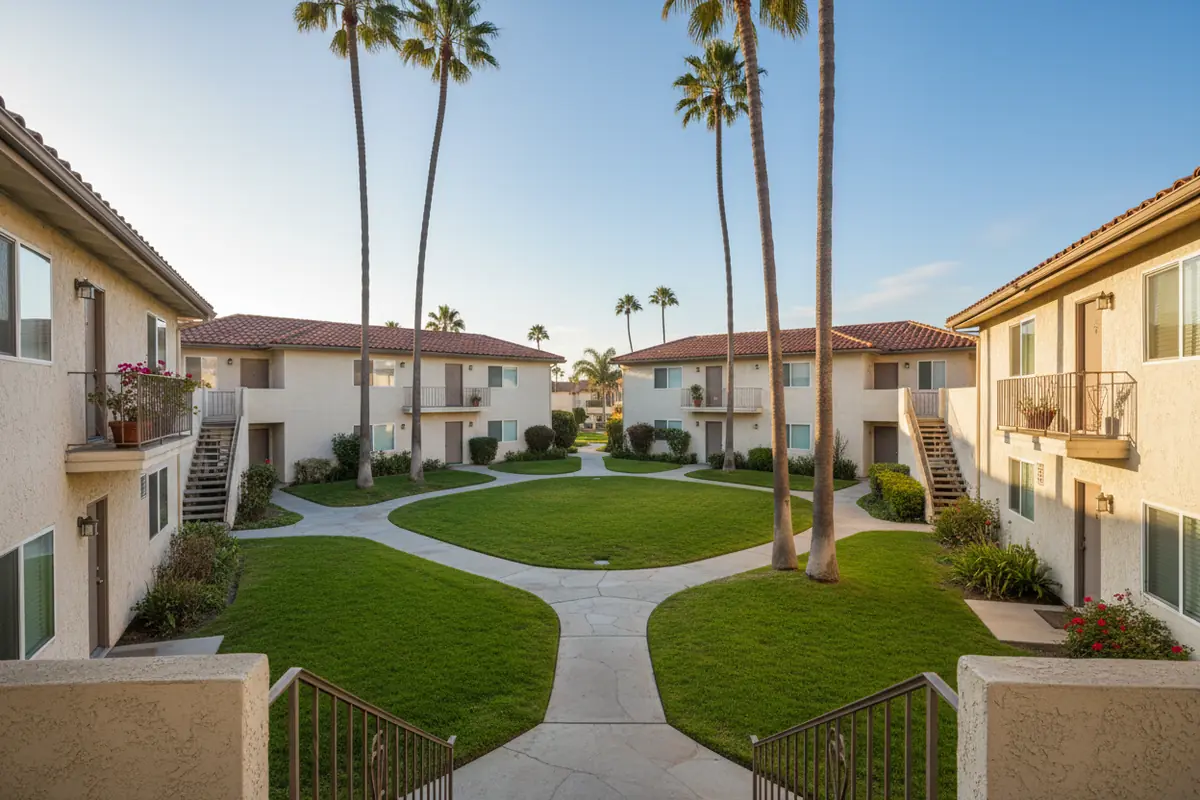
A condominium appraisal is an independent appraiser's written opinion of what one condo unit is worth. It covers the unit and its shared interest in the common areas, such as the lobby, pool and grounds. Because those areas are owned together, the appraiser also looks at the homeowners association and the comparable sales in similar projects.
On this page
Key Takeaways
- The unit, not the building. A condo appraisal values one unit and its undivided share of the common areas. It does not value the whole tower or complex.
- The project matters. Unlike a single-family home appraisal, a condo appraisal looks past the unit's walls. HOA finances, reserves, any litigation and the mix of owner-occupied and rented units can all shape the opinion. For a loan, the lender's own standards, including those in the Fannie Mae Selling Guide for loans it buys, may call for a project review. That is a lender-side requirement, not a rule for every appraisal.
- The purpose sets the rules. A sale, refinance, divorce, estate, probate, trust or property tax question each asks for value in a different way. California law speaks directly to divorce and probate, as the next section explains.
- The local pool differs. A high-rise unit in Downtown San Diego, a garden condo in Chula Vista and a beach-close unit in Pacific Beach draw on different comparable sales.
When a Condominium Appraisal Fits
Lending. Lenders often require an appraisal, though not always. Under 12 C.F.R. § 34.43, an appraisal by a state-credentialed appraiser is required for real estate-related financial transactions regulated there, except those that meet its listed conditions. Those conditions include a residential transaction value of $400,000 or less, and a transaction not secured by real estate. Where an exception applies, the regulation may call for an "appropriate evaluation" instead. Whether your loan needs an appraisal depends on the lender, the loan type and the transaction.
Divorce. California Family Code section 2552 says that, to divide the community estate, "the court shall value the assets and liabilities as near as practicable to the time of trial." On 30 days' notice by the moving party, the court may instead, for good cause shown, value all or part of the assets at a date after separation and before trial. An attorney can say which date applies.
Probate and estates. California Probate Code section 8900 provides that "the appraisal of property in the inventory shall be made by the personal representative, probate referee," or another appraiser the chapter provides for. A personal representative is the person the court appoints to run the estate. The estate and probate appraisals process explains the referee's role.
Pricing and tax questions. An owner in Hillcrest or Coronado may want an independent value before listing, before answering an offer, or before raising an assessment question with the county.
An appraisal is not the same as a home value estimate, an agent's comparative market analysis (CMA), or the county's assessed value. Each serves a different purpose, as the comparison below shows.
How a Condominium Appraisal Works, Step by Step
The process starts with a request and ends with a written report, and the project-level steps in between are what set a condo apart.
- Request. The owner, or someone with authority over the property, such as a personal representative or trustee, asks for an appraisal.
- Unit inspection. The appraiser walks the interior. They note condition, finishes, square footage, floor level, views, parking and storage.
- Project review. For a lending appraisal, the appraiser and lender may look at HOA documents. These can include the budget, the reserve study, any litigation and the owner-occupancy ratio. These factors bear on whether the project meets the lender's guidelines.
- Comparable sales. The appraiser looks for recent sales in the same project or similar nearby projects. Condo comparables differ from house comparables because shared amenities, HOA dues and the age and makeup of the project all move value.
- Report. The appraiser prepares a written report. Lending appraisals of a condo commonly use a report form designed for individual condominium units, with a section for the project.
A unit in Mission Valley and one in Encinitas may sit in projects with very different HOA structures, so the review in step three can look quite different from one building to the next.
Costs, Timing and Trade-offs
What a condo appraisal costs depends on several things. These include how complex the project is, how many good comparable sales exist, how much HOA review the purpose calls for, and whether the report is for a lender or for a private, legal or tax purpose. No figure is stated here, because fees vary with those factors.
Timing depends on the appraiser's schedule, how quickly the HOA produces its documents and how involved the report is. A project slow to release its budget or reserve study can hold up a lending appraisal.
The central trade-off is weight against effort. A signed appraisal from an independent appraiser generally carries more weight in a lending, court or tax setting than an online estimate or an agent's CMA. It also asks more of the owner in cost, scheduling and paperwork than an automated estimate or a broker's price opinion.
A CMA and a broker price opinion are prepared by real estate agents for pricing. Neither is an appraisal. The county's assessed value is a property tax figure set by the San Diego County Assessor. It is not a current market appraisal, and the two numbers can differ. For a property tax question, the Assessor's office is the place that explains how the assessed value was set.
Options to Compare
Each of these tools answers a different question, and none is the answer for every owner.
| Option | Who prepares it | Where it tends to fit | Its limits |
|---|---|---|---|
| Independent appraisal | An appraiser | Loans, divorce, probate, trusts, tax disputes | More cost, time and paperwork |
| Automated valuation model (AVM) | A computer model using sales data | A quick, low-cost first look | Depends on data; generally not used for court, tax or most loan purposes |
| Comparative market analysis (CMA) | A real estate agent | Setting a list price | An agent's pricing view, not an appraisal |
| County assessed value | San Diego County Assessor | Property tax bills | Set for tax purposes, not current market value |
A home value review by address is another reviewed estimate, also not an appraisal. The what is my home worth guide compares these tools side by side.
Laying the written estimates next to each other, along with what each one is based on, is how an owner tells which tool fits the purpose at hand. In probate and other legal settings, California Evidence Code section 813 also allows the value of property to be shown by the opinions of a qualified witness, the owner or the owner's spouse, or a knowledgeable officer, employee or partner a corporation, partnership or association designates when it is the owner.
What to Have Ready
A condo appraisal goes more smoothly when the paperwork is gathered first. It may help to have:
- Unit details. The address and unit number, floor level, square footage if known, and parking and storage assignments.
- HOA documents. These include the CC&Rs (the project's recorded rules), the bylaws, the current budget, the reserve study, recent meeting minutes and any notice of pending litigation. The appraiser may ask the HOA for these directly.
- HOA finances. Recent financial statements and the monthly dues amount.
- Earlier reports. Any prior appraisal of the unit.
- The valuation date. For an estate, this is the date the estate is valuing the property as of. For a divorce, it is the date the parties or the court have identified under Family Code section 2552.
- Tax notices. For an assessment question, the county's notice of assessed value.
An heir clearing out a parent's unit in Santee or El Cajon may find most of these papers already in a file the HOA mailed each year.
Local Context: Condominium Appraisals in San Diego County
San Diego County's condo inventory is wide. It runs from towers in Downtown San Diego to mid-rise buildings in Mission Valley, Hillcrest and North Park, to lower-density attached homes in Chula Vista, El Cajon, Santee and Escondido.
Coastal areas form their own comparable-sales pools. In La Jolla, Pacific Beach, Ocean Beach, Coronado, Carlsbad and Encinitas, distance to the water, views and the age of a project can separate one building from the next. An appraiser working in these areas generally looks first for sales inside the same project.
HOA health varies across the county. A project with deferred maintenance, pending litigation or a low share of owner-occupants may meet lender limits that widen the appraisal's scope or affect the loan. A unit that sells easily in one project may face a longer review in another a mile away.
The San Diego County Assessor-Recorder-County Clerk keeps ownership records and assessed values for condo units in the county. The broader San Diego property appraisals overview covers other property types. A practical next step is to look up the unit's ownership and assessed value record with the county and to ask the HOA whether its current budget and reserve study are available.
Take the next step
Ready to take the next step with your property?
Tell us about the property and why you need an appraisal, so an independent appraiser can confirm the right scope of work.
How it works
- The propertyIts address and its type.
- The purposeA sale, an estate or probate, a divorce, a trust, tax or a legal matter.
- Your timelineWhen the appraisal is needed.
Take the next step
How we work
- Every request is reviewed by a person. Nothing on this site calculates a value automatically.
- Appraisals are prepared by independent, state-licensed or certified appraisers, never by this website.
- Estimates and cash offers are clearly labeled — never presented as appraisals.
- A request does not commit you to anything.
Frequently asked questions
What is a condominium appraisal?
It is an independent appraiser's written opinion of one condo unit's market value. That value includes the unit's share of the common areas. For a loan, it may also involve a review of the HOA project's finances and legal standing.
How does a condo appraisal differ from a single-family home appraisal?
A condo appraisal values the unit and its undivided interest in the common areas, not a separate lot. It also considers HOA finances, reserves, litigation and owner-occupancy. Comparable sales generally come from similar condo projects rather than detached houses.
Is a home appraisal worth it?
It depends on the purpose. A signed appraisal generally carries more weight than an estimate or a CMA in lending, court and tax settings, but it asks more in cost and time. For a casual pricing question, a lighter tool may answer it. A residential property appraisal suits other home types.
What are the different types of appraisal forms?
Condo lending appraisals commonly use a report form built for individual condominium units, with a project section. For estate, divorce or tax purposes, the appraiser may use a different report format suited to that use.
What does appraisal mean?
An appraisal is a written opinion of a property's value by an independent appraiser. It differs from a home value estimate, a CMA and the county's assessed value. Each is prepared differently and serves a different purpose.
What not to tell an appraiser?
A target value or a number you "need" does not belong in the conversation. The appraiser's opinion must stay independent. Factual details are fair to share, such as recent improvements, HOA dues, and parking and storage. That independence is what gives the report its weight.
How does a condo appraisal relate to a divorce proceeding in California?
Family Code section 2552, described above, sets when the court values community assets. An independent appraisal of the unit gives the court a value as of that point. An attorney can say which date applies to a particular case.
When is a condo appraisal required for probate in California?
Probate Code section 8900 assigns the appraisal of inventory property to the personal representative, the probate referee or another appraiser the chapter provides for. Evidence Code section 813 also lets the owner give an opinion of value. The estate's attorney can say who appraises what.
How does the San Diego County assessed value differ from an appraisal?
The assessed value is the county Assessor's figure for property tax. An appraisal is an opinion of current market value. The two can differ. The Assessor's office explains how a unit's assessed value was set.
Do lenders always require an appraisal for a condo?
No. 12 C.F.R. § 34.43 requires one except where its listed conditions apply. Whether a given loan needs one depends on the lender, the loan type and the transaction.
What HOA documents does an appraiser need for a condo appraisal?
For a lending appraisal, these often include the budget, reserve study, financial statements, CC&Rs, bylaws, meeting minutes and any litigation notices. The appraiser may request them from the HOA, and how quickly they arrive can affect timing.