You hold, or are about to hold, a commercial building in San Diego County, perhaps a small apartment property, a storefront, a warehouse or a share in a partnership that owns one. A loan, a sale, an estate, a divorce or a property tax bill now needs a number that someone else will accept. This page lays out what a commercial appraisal involves, when it fits, what drives its cost and timing, and how it compares with the quicker estimates you may have been offered.
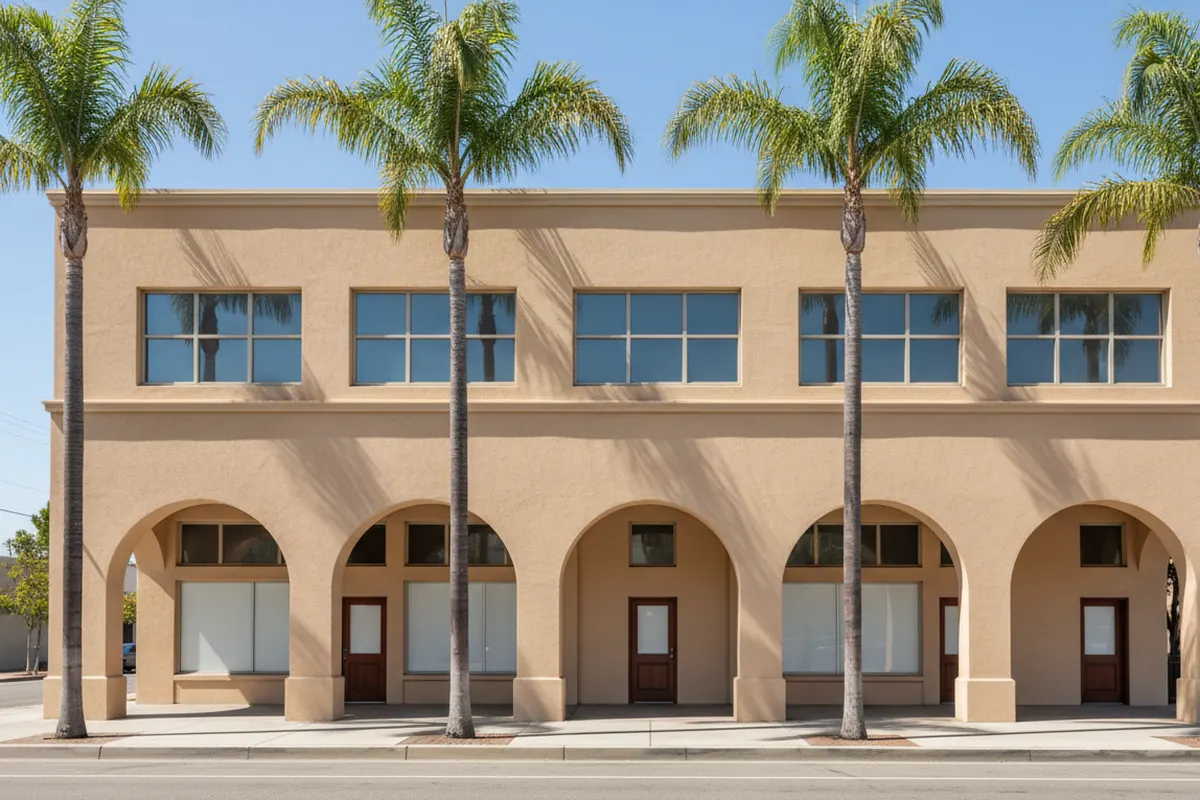
A commercial real estate appraisal is a formal, written opinion of a commercial property's market value, prepared by a state-credentialed appraiser after inspecting the property and studying its market. It covers office, retail, industrial, multifamily buildings of five or more units, mixed-use, hospitality and special-purpose property. It is the value opinion lenders, courts and tax appeal boards generally rely on.
On this page
Key Takeaways
- What it is. A commercial appraisal is a documented opinion of market value. Market value here means, in plain words, the price a willing buyer and a willing seller would likely agree on in an open market.
- Who prepares it. In California, appraisers are credentialed by the Bureau of Real Estate Appraisers (BREA), the state agency that issues appraiser credentials.
- What it covers. Special-purpose property includes, for example, a church, a school building or a self-storage facility. Homes of one to four units are typically appraised under residential standards instead.
- How it differs from a residential appraisal. A commercial assignment is usually broader in scope, leans more heavily on the property's income, typically calls for a Certified General credential rather than a Certified Residential one, and involves more data and analysis.
- What it is not. A home value estimate, a broker's opinion or comparative market analysis, and an assessed value are each different from an appraisal.
- Cost. Fees vary with property type, complexity and intended use.
When This Option Fits
A commercial appraisal fits when someone outside the ownership has to accept the value. The situations that commonly call for one include:
- the sale or purchase of a commercial property;
- refinancing or new financing;
- estate administration and probate;
- trust distribution;
- divorce or dissolution proceedings;
- a property tax assessment appeal;
- a partnership buyout or dissolution;
- eminent domain, meaning a public agency acquiring private property for public use.
Lenders typically require an appraisal that meets federal and state standards before making a commercial loan. In an estate, a California court filing may call for a formal value of real property; the steps and the probate referee's role are explained in estate and probate appraisals. A divorce raises its own valuation-date question, described under divorce real estate appraisal, and estate or gift tax filings follow the rules discussed under IRS real estate appraisal.
An owner who disagrees with the assessed value may bring an appeal before the San Diego County Assessment Appeals Board. An independent appraisal can support that appeal. The application is filed "with the county board," and state law sets the filing period "from July 2 to September 15, inclusive," with the last day "extended to November 30" where the county assessor does not provide a notice of assessed value "by August 1."
How It Works, Step by Step
The process moves in a recognizable order, though its depth depends on the property.
1. Engagement. The appraiser and the client define the scope of work. That means the intended use (financing, estate, tax appeal and so on), the intended users who will rely on the report, and the property's type and complexity. 2. Property inspection. The appraiser visits the site and documents its physical condition, its buildings and other improvements, and its site characteristics, such as access, parking and lot shape. 3. Market research. The appraiser gathers comparable sales, lease data, and income and expense data for the property's market area in San Diego County. 4. Valuation. The appraiser applies the standard approaches that suit the property: - Sales Comparison Approach. This approach compares the property with recent sales of similar properties and adjusts for differences. - Income Approach. This approach converts the property's income stream into a value. It either capitalizes one year's net income or discounts several years of projected cash flow back to today. - Cost Approach. This approach adds land value to the cost of replacing the improvements, less depreciation.
Income-producing property, such as apartments, offices and retail centers, usually leans most on the Income Approach. Owner-occupied and special-purpose buildings often lean on the Cost Approach, because few comparable sales exist. The appraiser then reconciles the results into one opinion. 5. Report preparation. The appraiser writes the report in one of two standard formats. An Appraisal Report presents the analysis in full. A Restricted Appraisal Report is shorter and is meant only for the client named in it. 6. Delivery and review. The report goes to the client. The intended use stated at engagement governs who may rely on it. A report prepared for a lender is not automatically fit for a court or a tax appeal.
Costs, Timing and Trade-offs
Cost follows the work. The main drivers are the property type, its size, its complexity, the intended use and the scope of work. A building with many tenants, unusual leases or a mix of uses takes more analysis than a building with one use. A small multifamily property with five or six units and simple leases generally involves less work than a large mixed-use building or a special-purpose property with few comparable sales. Litigation support or a rushed assignment can add scope, for example extra review, a deposition or a tighter schedule. The fee for any particular assignment comes from the appraiser's quote, not from a general figure.
Timing depends on the same factors, plus how readily sales and lease data can be found and how busy the appraiser is. A report for a property with good records and plenty of comparable sales tends to move faster than one where the appraiser has to rebuild income history.
The central trade-off is this. A formal appraisal costs more and takes longer than a broker opinion of value or a desktop estimate. In return, it produces a credentialed, defensible opinion. Where the value has to hold up before a loan committee, a judge or an appeals board, a quicker estimate does not take its place, and the extra time and cost buy acceptance in those settings.
Options to Compare
Each source of a value number has real uses and real limits. The question that sorts them out is what the number has to do.
| Option | Who prepares it | Genuine uses | Genuine limits |
|---|---|---|---|
| Formal commercial appraisal | A state-credentialed appraiser | Financing, court filings, tax appeals, estate and partnership matters | Higher cost and a longer timeline |
| Broker opinion of value (BOV) or comparative market analysis (CMA) | A real estate broker or agent | Pricing a listing, testing a sale idea, internal planning | Not accepted by most lenders or courts as a substitute for an appraisal |
| Automated valuation model (AVM) or online home value estimate | A computer algorithm | A rough first look | No site inspection or credentialed opinion, and limited reliability for commercial property with unique features |
| Assessed value | San Diego County Assessor | The basis for property tax | Not a market value and not an appraisal |
A BOV can be a sensible starting point for an owner who is only deciding whether to list. An AVM is quick, but it cannot see a deferred roof, a below-market lease or a parking shortage. The assessed value comes from California's property tax rules, so it can drift well away from market value over the years an owner holds a property.
An owner finds the fit by comparing the intended use of the value opinion with what each option actually produces. No single option is right for every purpose.
What to Have Ready
A commercial property appraiser works from records, and a complete file at the start tends to keep questions to a minimum. Owners commonly gather:
- The property address and assessor's parcel number (APN). The APN identifies the parcel and is available from the San Diego County Assessor's office.
- The current rent roll and lease abstracts. A rent roll lists each tenant, the space they occupy and what they pay. A lease abstract is a short summary of each lease's key terms. Both apply to income-producing property.
- Operating income and expense statements.
- The current property tax bills.
- Surveys, site plans or improvement drawings, if any exist.
- The property's recent sale or listing history.
- Earlier appraisals, environmental reports or inspection reports.
- The intended use of the appraisal. The purpose, whether financing, an estate, a tax appeal or a sale, shapes the scope of work and the report format.
Where a value is needed as of a past date, such as a date of death, the records from that period matter most. That situation is described under retrospective home appraisal.
Local Context: Commercial Real Estate Appraisal in San Diego County
San Diego County's commercial property runs from the coast to the inland valleys. It includes office, industrial, retail, hospitality and multifamily buildings in very different submarkets. Downtown San Diego, Mission Valley, Kearny Mesa, Sorrento Valley and UTC/La Jolla sit within the city's core and its northern employment areas. Chula Vista lies to the south, El Cajon to the east, and Escondido, covered further under Escondido property appraisals, lies inland. Carlsbad and Oceanside anchor the coastal North County corridor. For an appraiser, these names matter as geography. Comparable sales and leases are drawn from the market area a property actually competes in, so a Kearny Mesa warehouse and a Carlsbad office are studied against different sets of data.
The San Diego County Assessor's office is the source for assessed values and APN lookups across San Diego County. An owner who disputes an assessment brings the matter to the San Diego County Assessment Appeals Board.
A practical next step is to locate the property's APN and current tax bill. With those in hand, the next question is which purpose the value has to serve, whether a lender, a court, an estate or an appeal.
Take the next step
Ready to take the next step with your property?
Tell us about the property and why you need an appraisal, so an independent appraiser can confirm the right scope of work.
How it works
- The propertyIts address and its type.
- The purposeA sale, an estate or probate, a divorce, a trust, tax or a legal matter.
- Your timelineWhen the appraisal is needed.
Take the next step
How we work
- Every request is reviewed by a person. Nothing on this site calculates a value automatically.
- Appraisals are prepared by independent, state-licensed or certified appraisers, never by this website.
- Estimates and cash offers are clearly labeled — never presented as appraisals.
- A request does not commit you to anything.
Frequently asked questions
What types of properties does a commercial real estate appraisal cover?
It covers income-producing and non-residential property: office buildings, retail centers, industrial and warehouse property, larger multifamily buildings, mixed-use buildings, hotels and other hospitality property, and special-purpose property. Single-family homes and smaller residential buildings are typically appraised under residential standards.
How does a commercial appraisal differ from a residential appraisal?
The scope is usually larger. A commercial appraisal typically calls for a Certified General credential, where most homes call for a Certified Residential one. It also relies more on the Income Approach alongside sales comparisons. Data needs, report formats and timing expectations differ as well.
What are the three approaches used to value commercial property?
They are the Sales Comparison, Income and Cost Approaches. The first compares recent sales of similar properties. The second converts the property's income into value through capitalization or discounted cash flow. The third adds land value to the depreciated replacement cost of the improvements.
How is the market value of a commercial property calculated?
The appraiser reconciles the results of the approaches that apply. Each result counts for more or less depending on the property type and how good the data is. For income-producing property, the Income Approach usually counts most. The written report explains the method and the data used.
What is the difference between a commercial appraisal and an assessed value?
They answer different questions. An assessed value is the San Diego County Assessor's figure for property tax, set under California's property tax rules. An appraisal estimates what a willing buyer and seller would agree to in an open market. The two figures often differ.
When is a commercial real estate appraisal required?
Lenders typically require one for commercial financing. Courts, including probate and family law proceedings, generally look for a credentialed appraisal to support a value. Property tax appeals and partnership or estate distributions may call for one too. A BOV or an automated estimate does not substitute in these settings.
What should I not tell an appraiser?
Stating a desired value or a number the deal needs is the problem. That can compromise the appraisal's independence. Factual information about the property's income, expenses, condition and history is appropriate and helpful, because accurate data lets the appraiser reach an independent conclusion.
Can a commercial appraisal be used for a property tax appeal in San Diego County?
Yes. An appraisal prepared by a credentialed appraiser can support an assessment appeal before the San Diego County Assessment Appeals Board. The process and its filing deadlines are set by California law.