Many readers own an office building in San Diego County, or hold an interest in one as an executor, a trustee, a partner or a spouse, and a sale, a loan, an estate, a divorce or a property tax question now turns on what that building is worth. Office property does not behave like a house, and online numbers and agent opinions answer a different question. This page lays out what a formal appraisal of an office building involves, when it fits, how it differs from other ways of estimating value, and what an owner usually gathers before requesting one.
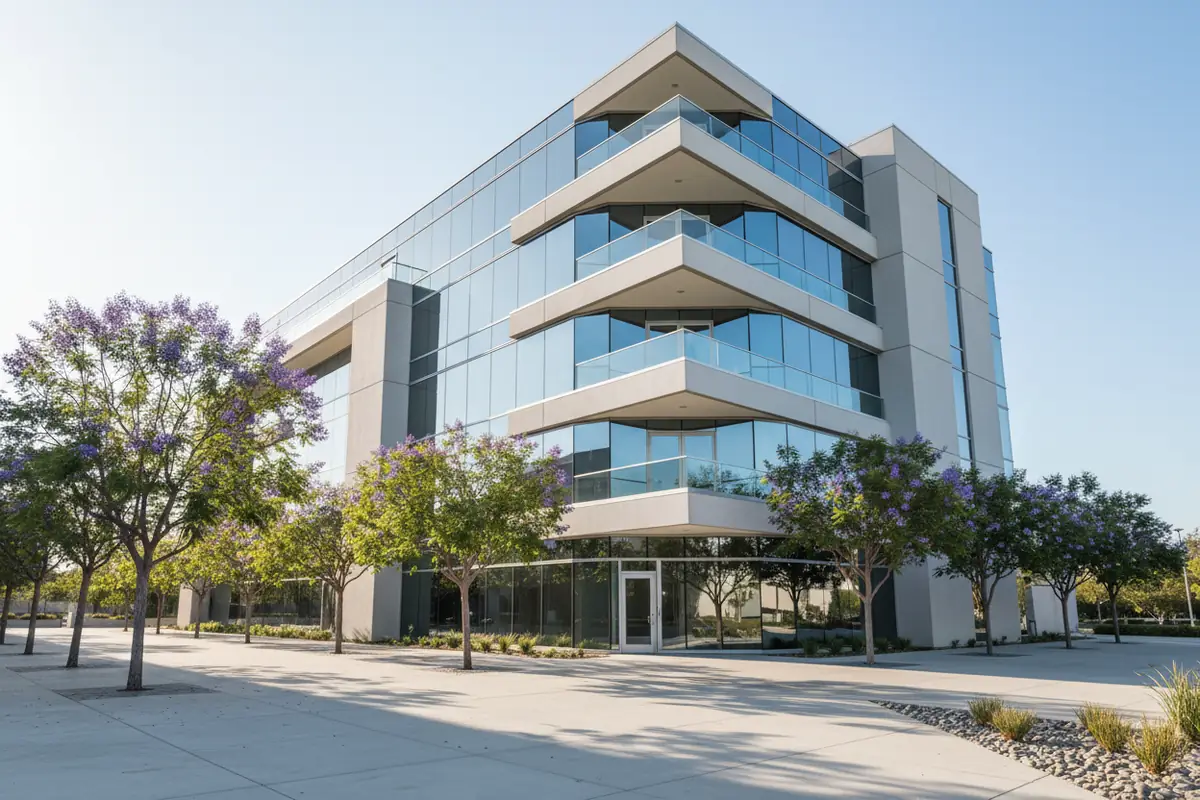
An office building appraisal is a formal written opinion of an office property's market value, prepared by a state-credentialed appraiser after inspecting the building and studying sales, leases and income data. It states a value as of a specific date, and it is the kind of document a lender, a court or a tax authority typically relies on.
On this page
Key Takeaways
An office building appraisal produces one central thing: an appraiser's written opinion of market value, meaning the price a property would likely bring between a willing buyer and a willing seller as of a stated date. In San Diego County, as elsewhere in California, that opinion rests on a physical inspection and on market data the appraiser gathers and explains in the report.
Several other numbers get called "value," and each serves a different purpose:
- A home value estimate or automated valuation model (AVM). A computer-generated estimate built from public records and sales data, with no one walking the property.
- A comparative market analysis (CMA) or broker's opinion of value (BOV). A real estate agent's or broker's review of comparable properties, used mainly to set an asking price.
- Assessed value. The figure the county assessor sets for property tax purposes under California's assessment rules, which can differ from current market value.
An office building is commercial real property, so its appraisal differs from a residential one in scope, method and data. A house is usually valued mainly by comparison with nearby home sales. An office building's value depends heavily on its leases, tenants, rents and operating expenses, so the appraiser studies the income the building produces as well as what similar San Diego County buildings have sold for. That difference also shapes cost, which turns on the assignment rather than a set price.
When This Option Fits
A formal appraisal tends to come up when someone other than the owner needs a value they can rely on. Common situations in San Diego County include:
- A sale or purchase. A seller may want a supported figure before setting terms, a buyer may want one before committing, and a buyer's lender usually orders its own.
- A refinance or new commercial loan. A lender making a loan secured by the building generally requires an appraisal to support the loan amount.
- Estate settlement, probate or trust administration. Where an office building is part of an estate or a trust, the executor or trustee often needs a value as of a particular date. The steps for trust assets are described under trust property appraisal.
- Divorce or dissolution. When commercial real property is part of the marital estate, its value is part of dividing it.
- A property tax appeal. An owner who disagrees with the value set by the San Diego County Assessor/Recorder/County Clerk may present an appraisal in an appeal, which may go before the San Diego County Assessment Appeals Board.
- A partnership dissolution or a buy-sell agreement. Many agreements among co-owners name a valuation event that sets the price one owner pays another.
These situations differ in who orders the appraisal, who relies on it and what date the value is set as of. A broker's opinion or an online estimate may help an owner think about price, but lenders, courts and tax authorities typically look for the formal appraisal document. Where co-owners, spouses or heirs are in conflict over value or a case has been filed, that contested matter is a separate subject, handled by an attorney.
How It Works, Step by Step
The process follows a fairly consistent order, though details depend on the building and the purpose of the appraisal.
1. Engagement. An owner, lender, attorney or estate representative requests the appraisal. The appraiser and the client agree on the scope of work and the intended use, which sets the date of value and the kind of report. 2. Property inspection. The appraiser physically inspects the building, noting its size, layout, age, condition, improvements and any deferred maintenance, meaning repairs that have been put off. 3. Market research. The appraiser gathers data on comparable office sales, lease rates, vacancy and income in the relevant part of San Diego County. 4. Valuation approaches. Commercial appraisers typically apply one or more of three approaches: - The sales comparison approach compares the building with recent sales of similar office properties and adjusts for differences. - The income approach converts the building's net operating income, the rent it collects less its operating expenses, into a value by applying a capitalization rate drawn from the market. - The cost approach estimates what it would cost to replace the building, subtracts depreciation and adds the value of the land. 5. Reconciliation and report. The appraiser compares the results of the approaches used, explains which carries more weight for this property, and issues a written report stating the opinion of value as of a specific effective date.
In California, appraisers are credentialed by the state's Bureau of Real Estate Appraisers. The California Bureau of Real Estate Appraisers website is the official source for consumer information about appraiser credentials.
Costs, Timing and Trade-offs
Cost and timing follow the complexity of the assignment, and an office building can be simple or quite involved. Factors that shape scope include:
- Building size and layout. A larger or more complicated building takes more inspection and analysis.
- Number of tenants and lease structure. A multi-tenant building with varied lease terms calls for a more detailed income analysis than a single-tenant property, so it typically takes longer and costs more.
- Condition. Deferred maintenance or unusual improvements add work to the inspection and the cost approach.
- Intended use. An appraisal for a lender follows that lender's requirements, and one for a property tax appeal follows the county assessor's process; in a probate, "The probate referee shall appraise all property other than that appraised by the personal representative." Litigation work often adds preparation beyond the report itself.
The factors that set fees for homes are laid out under home appraisal cost; for office property, the same logic applies with income analysis added. An appraiser quotes a fee and a delivery date for a specific assignment once the scope is clear.
The central trade-off is this: a formal appraisal costs more and asks more of the owner, in documents and access, than an online estimate or a broker's opinion of value. In exchange, it produces the document that courts, lenders and tax authorities accept, with its reasoning written out where anyone relying on it can follow and test it. For an owner who only wants a rough sense of price, that extra rigor may be more than the moment needs; for a loan, an estate or a tax appeal, the lighter tools usually fall short.
Options to Compare
Each way of estimating an office building's value has a use.
| Option | Who prepares it | What it does well | Where it falls short |
|---|---|---|---|
| Formal appraisal | A state-credentialed appraiser | Inspection-based, documented opinion of market value as of a stated date | Costs more and takes more preparation than other options |
| AVM or online estimate | A computer model | Quick, rough starting point | No inspection; generally not accepted by courts or lenders for commercial property |
| BOV or CMA | A real estate agent or broker | Useful for pricing and listing decisions | Not a substitute for an appraisal in legal or lending settings |
| Assessed value | The county assessor | The official basis for the property tax bill | Set under assessment rules; can differ from current market value |
An AVM cannot see a building's leases, condition or tenant mix, which drive office value. A BOV or CMA brings local market knowledge and can guide asking price, as explained under appraisal for private sale for owners selling without a lender involved. Assessed value is a public record: the San Diego County Assessor/Recorder/County Clerk website is the source for assessed value and property record information. Which tool fits depends on who will rely on the number and why; none of them suits every situation.
What to Have Ready
An owner requesting an office building appraisal typically gathers several documents that the appraiser uses to define the scope of work:
- Property address and assessor's parcel number (APN). The APN is the county's identifying number for the parcel, available from the San Diego County Assessor/Recorder/County Clerk.
- Current rent roll. A list of each tenant, lease terms, monthly rent and lease expiration dates.
- Operating statements. Recent income and expense records.
- Surveys, site plans and improvement records. These describe the land, the building and work done on it.
- Title report or deed. These show how ownership is held, which matters for who orders the appraisal and who signs documents in a sale or loan.
- Earlier appraisals and reports. Prior appraisals, environmental reports or inspection reports help the appraiser understand the property's history.
- The intended use. Whether the appraisal is for a sale, refinance, estate, divorce or tax appeal shapes the scope the appraiser agrees to.
If the building has an unusual layout or mixed uses, finding comparables can take more effort, a point discussed under appraisal for unique homes for residential property.
Of these items, the intended use, the rent roll and recent operating statements most directly shape the scope of an appraisal request.
Local Context: Office Buildings in San Diego County
San Diego County holds a range of office submarkets, each with characteristics an appraiser draws on: downtown San Diego, Mission Valley, Kearny Mesa, Sorrento Valley, La Jolla, Chula Vista, El Cajon, Escondido and Carlsbad among them. A building in Sorrento Valley competes for tenants differently than one in downtown San Diego, and a small professional building in Escondido or El Cajon draws on different comparable sales than a larger property in Mission Valley or Carlsbad. That is part of why office value is set building by building rather than read off a county-wide figure. Property records for one of those areas are described under El Cajon property appraisals.
Two county offices hold the public records an office building appraisal often touches. The San Diego County Assessor/Recorder/County Clerk maintains property records, assessed values and ownership information for parcels in the county. The San Diego County Treasurer-Tax Collector handles property tax billing and payment records.
San Diego Home Appraisal & Valuation does not appraise, value, inspect or buy property and does not give appraisal, legal or tax advice; an appraiser sets value, the assessor's office answers assessed-value questions, and an attorney handles a contract, title or dispute.
Take the next step
Ready to take the next step with your property?
Tell us about the property and why you need an appraisal, so an independent appraiser can confirm the right scope of work.
How it works
- The propertyIts address and its type.
- The purposeA sale, an estate or probate, a divorce, a trust, tax or a legal matter.
- Your timelineWhen the appraisal is needed.
Take the next step
How we work
- Every request is reviewed by a person. Nothing on this site calculates a value automatically.
- Appraisals are prepared by independent, state-licensed or certified appraisers, never by this website.
- Estimates and cash offers are clearly labeled — never presented as appraisals.
- A request does not commit you to anything.
Frequently asked questions
What does an office building appraisal involve?
It involves an engagement that sets scope and intended use, a physical inspection, market research, one or more valuation approaches, and a written report stating market value as of a date.
How is an office building's value estimated?
Appraisers use one or more of three approaches: sales comparison, income and cost, outlined in the step-by-step section above. How much weight each carries depends on the property type and the data available for that part of San Diego County.
How much does a commercial property appraisal cost?
The cost depends on the assignment. Building size, number of tenants, lease complexity, condition and the purpose, such as lending, an estate or litigation, all shape the scope of work. An appraiser who reviews the property and its intended use is the person who can quote a figure for that scope.
How does an office building appraisal differ from a home appraisal?
Office buildings are commercial real property, so the appraiser analyzes leases, rents and expenses through the income approach in addition to comparable sales. A residential appraisal relies mainly on the sales comparison approach. The scope, the data sources and the report format all differ.
What is the difference between an appraisal and a home value estimate or AVM?
A formal appraisal is a credentialed appraiser's written opinion based on a physical inspection; an AVM is generated by an algorithm with no inspection.
How does an appraisal differ from the San Diego County assessed value?
Assessed value is set by the county assessor for property tax purposes under California's assessment rules and may differ from current market value. An appraisal reflects market value as of a specific date. Assessed value records are available from the San Diego County Assessor/Recorder/County Clerk.
What does appraisal mean in the context of a building or construction?
In real estate, an appraisal is a formal written opinion of a property's market value as of a specific date, based on inspection and market data. It is about value, not construction scope, so it is different from a contractor's bid or a construction cost estimate.
When is a formal office building appraisal required?
Lenders typically require one for a commercial loan or refinance. Probate, estate and divorce matters commonly call for one to value commercial property. A property tax appeal before the San Diego County Assessment Appeals Board may also involve one. Which applies depends on the transaction or proceeding involved.