Skip to content
San DiegoHome Appraisal & Valuation

California

Industrial Real Estate Appraisal

Updated November 17, 2026

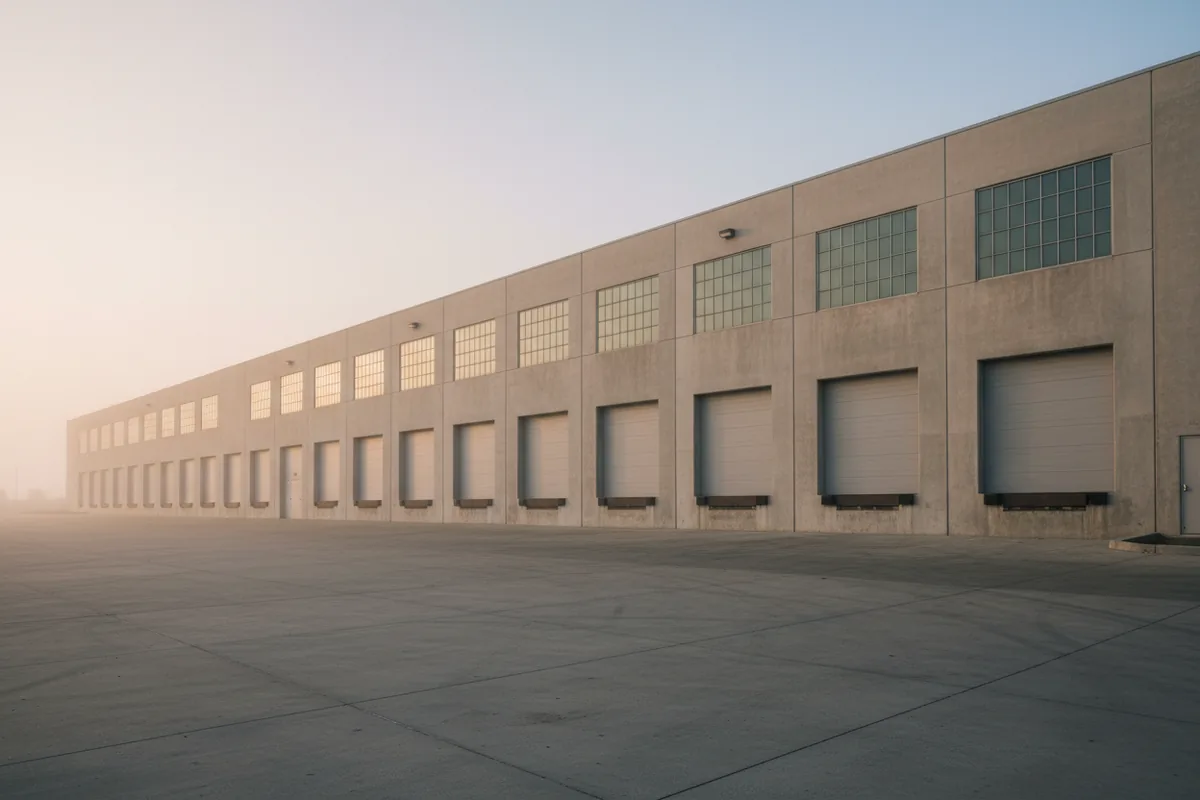
A concrete warehouse with closed dock doors, the industrial space this appraisal weighs.
Immediate answer

An industrial real estate appraisal is a written, documented opinion of the market value of a warehouse, distribution center, manufacturing building or flex space, prepared by a state-credentialed appraiser. It weighs physical features, zoning, lease income and comparable industrial sales, producing a report that a lender, court, estate or tax appeal can rely on.

On this page
  1. Key Takeaways
  2. When This Option Fits
  3. How It Works, Step by Step
  4. Costs, Timing and Trade-offs
  5. Options to Compare
  6. What to Have Ready
  7. Local Context: Industrial Property in San Diego County
  8. Frequently asked questions
  9. Sources

You own, inherited, manage as trustee, or are about to buy an industrial building or a warehouse in San Diego County, and someone now needs a number on paper. That someone may be a lender, a probate court, a spouse's attorney, a co-owner or the Assessor. The value of a building with loading docks and tall ceilings does not come from the sources that estimate home prices, and it can be hard to tell which kind of valuation a particular purpose calls for.

This page explains what an industrial appraisal involves, when one fits, how the work usually proceeds, what shapes its cost and timing, how it compares with other kinds of valuation, and what to gather before asking for one.

Key Takeaways

  • It is a different kind of valuation from a home appraisal. A home appraisal leans on nearby home sales. An industrial appraisal also looks at income potential, zoning, clear height (the usable height under the roof structure), the number and type of dock doors, lot coverage (how much of the land the building occupies), and sales of comparable industrial buildings.
  • It is not the same as a quick estimate. Automated valuation models (AVMs), broker price opinions (BPOs) and comparative market analyses (CMAs) are estimates, not appraisals.
  • Location matters. San Diego County's industrial areas, including Otay Mesa, Kearny Mesa, Miramar and National City, each have their own mix of buildings, tenants and uses, and those differences affect value.
  • The result is a written report. That report can support a sale, a refinance, an estate or trust administration, a divorce, or a property tax matter.

When This Option Fits

A formal appraisal fits when a value has to stand up to someone other than the owner. Common situations include these:

  • Sale or purchase. A buyer or seller may want an independent opinion that is separate from a listing agent's estimate.
  • Refinance or SBA loan. Lenders typically require an appraisal for commercial and industrial property.
  • Estate and probate. When an industrial building is part of a decedent's estate, its date-of-death value matters; in a probate, "The probate referee shall appraise all property other than that appraised by the personal representative." That value is used for administration and can bear on a step-up in basis. How an estate values real property more broadly is described under estate and probate appraisals. Basis and estate tax questions belong with a CPA or a tax attorney. Related estate tax valuation is covered under estate tax appraisal.
  • Trust administration. A trustee who is distributing or selling an industrial asset may need a current appraisal to document fair market value.
  • Divorce. When the building is a marital or community asset, an appraisal supports dividing it. The timing rules for this kind of valuation are explained under divorce real estate appraisal. A contested matter is handled by an attorney.
  • Property tax appeal. An owner who believes the San Diego County Assessor's assessed value overstates market value may use an independent appraisal to support an appeal to the Assessment Appeals Board.
  • Partnership buyout or business dissolution. Co-owners settling their interests often need a value they can agree on.

A warehouse appraisal is the most common version of this work in the county. Warehouses follow the same appraisal process as other industrial properties.

How It Works, Step by Step

The process moves from the request, to the building itself, to the data, and finally to a report.

1. Engagement. The owner, or someone with authority over the property such as an executor or trustee, asks for an appraisal. They provide the address, the parcel number, the property type and the intended use of the report. 2. Property inspection. The appraiser looks at the building's size, construction type, clear height, dock-high and grade-level doors, office build-out, lot size and condition. The appraiser also notes any deferred maintenance, meaning repairs that have been put off. 3. Data gathering. The appraiser researches comparable industrial sales and leases in San Diego County. They also review the zoning, which may be industrial, light industrial, heavy industrial or flex. If the property is leased, they collect income data. 4. Choosing approaches. Industrial property is usually analyzed under one or more of three methods: - The sales comparison approach uses comparable sales. - The income approach capitalizes net operating income. In plain terms, the appraiser starts from the property's income after operating expenses and converts that yearly figure into a single value, so a building's worth is tied to what it earns. This approach matters most for leased buildings. - The cost approach estimates replacement cost less depreciation.

The appraiser selects the methods that suit the property and the purpose. 5. Reconciliation and report. The appraiser weighs the results of each method against one another and arrives at a final value opinion. That opinion is delivered as a written report, typically one that complies with USPAP.

USPAP, the Uniform Standards of Professional Appraisal Practice, is the national standard that appraisers follow. In California, appraisers are credentialed and regulated by a state agency, the Bureau of Real Estate Appraisers.
Costs, Timing and Trade-offs

The fee for an industrial appraisal depends on how complicated the property and the assignment are. A single-tenant warehouse is a different job from a multi-tenant industrial park, or from a manufacturing plant that raises environmental questions.

Several factors shape the cost:

  • Size. Both the building's square footage and the land's acreage matter.
  • Tenants. Each lease is another document for the appraiser to read.
  • Comparable data. Some submarkets have more recent sales to draw on than others.
  • Intended use. Estate, litigation and retrospective assignments often call for more documentation. A retrospective appraisal values the property as of a past date, such as a date of death.
  • Requested turnaround. A shorter delivery time can affect the fee.

Timing follows the same pattern. An industrial appraisal in San Diego County typically takes longer than a residential one because comparable industrial data is less abundant. The appraiser can give an estimated delivery date when the assignment begins.

The central trade-off is between a quick estimate and a formal appraisal. An appraisal costs more and takes longer. In exchange, it produces the kind of documented opinion that lenders, courts, the IRS and the Assessment Appeals Board look for. Valuations prepared for federal tax purposes are discussed further under IRS real estate appraisal.

Options to Compare

Each kind of valuation answers a different question, so a side-by-side view helps.

OptionWhat it isTypical limits for industrial property
Formal appraisalDocumented value opinion from a credentialed appraiser, after an inspectionCosts more and takes longer
AVMAn estimate generated by an algorithm from recorded dataLess reliable here because industrial sales are infrequent and varied
BPO or CMAA broker's or agent's market-based opinionNot an appraisal; generally not accepted by lenders, courts or tax authorities for formal purposes
Assessed valueThe Assessor's value under California's Proposition 13 frameworkReflects a base-year value adjusted over time, not necessarily current market value
Desktop or restricted-use appraisalA limited-scope report, often without a full inspectionMay not meet lender or court requirements

A limited-scope report can cost less than a full appraisal. Its acceptability depends on who will read it, so the intended use is worth confirming before one is ordered.

The choice among these options usually starts with the purpose of the valuation, whether a sale, a loan, an estate, a tax appeal or litigation, and depends on who will rely on the number.

What to Have Ready

Gathering the right papers before the request lets the appraiser define the assignment accurately. Useful items include:

  • Parcel number and legal description. Both are available through the San Diego County Assessor's parcel records.
  • Rent roll and lease abstracts. These should show tenant names, lease terms, rents, options and any rent abatements.
  • Recent operating statements. These show income and expenses if the property produces income.
  • Earlier reports. Prior appraisals and environmental reports, including any Phase I or Phase II environmental assessments, are useful.
  • Building records. Plans, permits or certificates of occupancy help, especially for specialized improvements such as cold storage, crane rails or hazardous-material handling.
  • Ownership documents. A title report or deed shows current ownership.
  • Pending deal papers. Any sale contract, listing agreement or letter of intent belongs in the file.
  • The key date for an estate or trust. For an estate, this is the date of death. For a trust, it is the distribution date.
  • Tax appeal paperwork. For an appeal, the Assessor's most recent Notice of Assessed Value matters. The current filing deadline is confirmed with the San Diego County Assessment Appeals Board itself.

Local Context: Industrial Property in San Diego County

San Diego County's industrial market is spread across several distinct submarkets:

  • Otay Mesa: border-adjacent logistics and manufacturing.
  • Kearny Mesa: light industrial and flex buildings.
  • Miramar: distribution and aerospace-adjacent uses.
  • National City: port-adjacent industrial property.
  • Chula Vista: a growing logistics corridor.
  • Carlsbad, Vista and San Marcos: biotech-adjacent flex and light industrial buildings in North County.

The market is shaped by access to the Port of San Diego, the Otay Mesa border crossing, and the I-5, I-15, SR-94 and SR-905 corridors.

Zoning is set by different governments depending on where the property sits. The City of San Diego, the County of San Diego for unincorporated areas, and incorporated cities such as Chula Vista, National City, El Cajon, Santee and Escondido each administer their own industrial zoning. A building's zoning classification decides its permitted uses, and permitted use bears on value. Valuation questions particular to North County are covered under Escondido property appraisals.

The San Diego County Assessor-Recorder-County Clerk maintains parcel records, assessed values and ownership information. Comparable sales come from recorded deeds and from commercial databases, and the appraiser's access to that data is a central part of the engagement.

San Diego Home Appraisal & Valuation does not appraise, value, inspect or buy property. A reader can request an appraisal quote through its form.

Take the next step

Ready to take the next step with your property?

Tell us about the property and why you need an appraisal, so an independent appraiser can confirm the right scope of work.

How it works

  1. The propertyIts address and its type.
  2. The purposeA sale, an estate or probate, a divorce, a trust, tax or a legal matter.
  3. Your timelineWhen the appraisal is needed.

How we work

  • Every request is reviewed by a person. Nothing on this site calculates a value automatically.
  • Appraisals are prepared by independent, state-licensed or certified appraisers, never by this website.
  • Estimates and cash offers are clearly labeled — never presented as appraisals.
  • A request does not commit you to anything.

Frequently asked questions

What is the most common appraisal method for an industrial property?

The sales comparison and income approaches are both widely used. Which one the appraiser emphasizes depends on whether the building is owner-occupied or leased, and on how many comparable sales exist in the submarket. The cost approach usually serves as a check, or applies to newer, specialized buildings.

How does an industrial appraisal differ from a residential home appraisal?

It accounts for features that homes do not have, such as clear height, dock doors, power capacity, industrial zoning and tenant income. The pool of comparable sales is smaller, and the report is typically more detailed.

What is a red flag on an appraisal?

A red flag is a finding that signals a problem with the property or with the report itself. In an industrial report, it might be contamination noted in earlier environmental reports, deferred maintenance that limits how the building can be used, zoning nonconformity, or comparables that differ in size, use or location.

Can I get my industrial property appraised for free?

No. An appraisal is a professional service that carries a fee. Some brokers offer a BPO or a CMA at no charge, but those are estimates rather than appraisals.

How does an industrial appraisal support a property tax appeal in San Diego County?

An independent appraisal can document an owner's position that the Assessor's value overstates market value. That documentation is presented to the San Diego County Assessment Appeals Board. The Board itself confirms the current filing deadline.

What is the difference between an appraisal and an automated valuation model (AVM)?

An appraisal is a documented opinion from a credentialed appraiser who inspects the property and analyzes comparable data. An AVM is an algorithm-generated estimate with no inspection, and it is often not accepted for lending, estate or legal purposes.

What is the difference between an appraised value and the San Diego County Assessor's assessed value?

The two measure different things. Assessed value is the figure the Assessor uses for property tax, while an appraisal reflects current market conditions. For an industrial building held for many years, the two figures can differ widely, and that gap is one reason owners consider a tax appeal.

Do I need a warehouse appraisal specifically, or does a general commercial appraisal cover it?

A warehouse is a type of industrial property, and it goes through the same appraisal process. The appraiser applies the methods suited to warehouse use and considers loading capacity, clear height, truck court depth and access to transportation corridors.