You may be buying a newly built house in San Diego County and waiting on the lender's appraisal, or holding a builder's contract and wondering whether the price matches the market. You might be an executor or trustee with a recently finished home in an estate, a spouse whose divorce includes a new build, or an owner looking at a property tax bill after construction ended. Each of these situations comes down to the same question: what is this particular house worth, and who has to say so in writing.
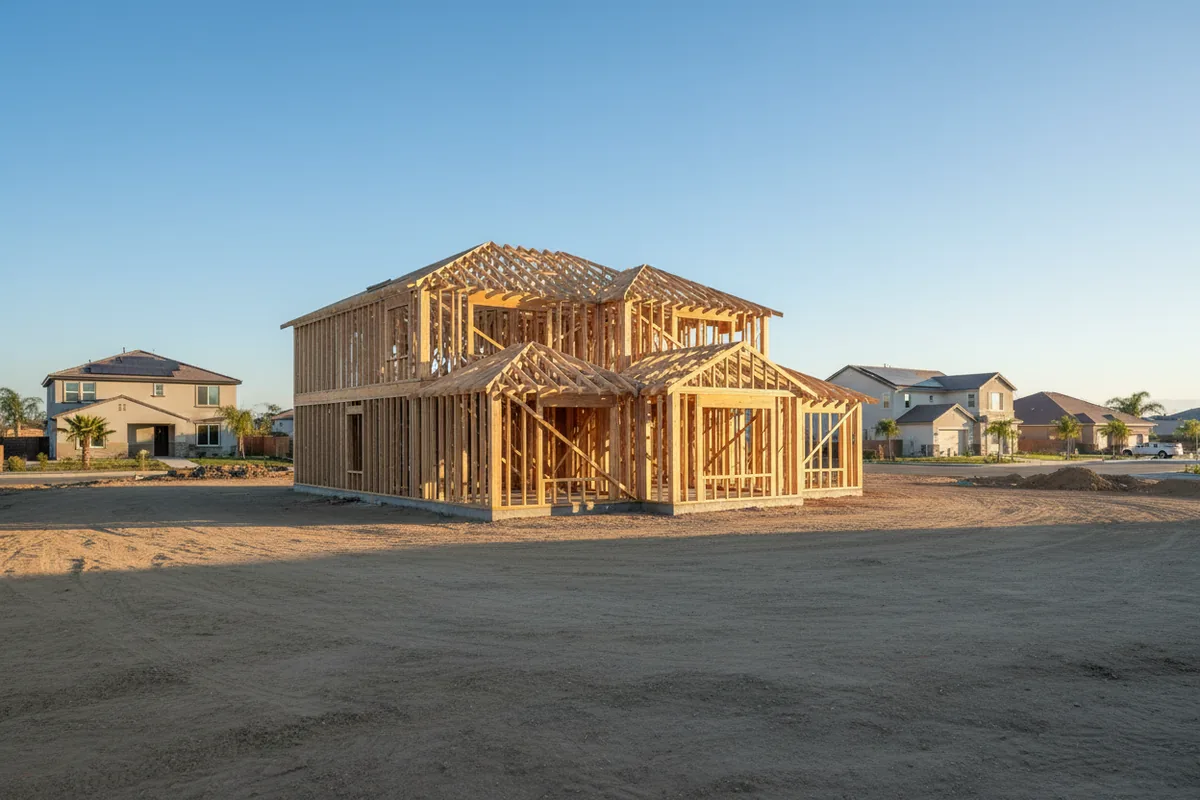
A new construction appraisal is an appraiser's written opinion of a newly built home's market value as of a stated date. It rests on the home's plans or a completed inspection and on comparable sales. Lenders often order one before funding a loan, and owners, estates and divorcing couples may need one too. It differs from the builder's price and the county's assessed value.
On this page
Key Takeaways
- An appraisal is its own valuation. It is an appraiser's independent opinion of market value, distinct from the builder's contract price, a lender's automated estimate and the San Diego County Assessor's assessed value. Assessed value is the figure the county uses to compute property tax.
- Lenders often require one, though not always. Federal regulation 12 C.F.R. § 34.43 generally requires an appraisal for a real estate-related financial transaction, except in the situations it lists.
- The Assessor values new construction separately. The San Diego County Assessor's office values completed construction for property tax. That work is not part of any independent appraisal.
- The appraisal and the builder's price can differ. When the two figures differ, buyers often have questions. The reasons depend on the comparable sales and on the home itself.
- This page covers San Diego County only. It deals with residential new construction in San Diego County under California law. Where a property or an owner is in another state, that state's law may apply.
When This Option Fits
Financing a newly built home. A lender may order an appraisal as a condition of a construction or purchase loan. Under 12 C.F.R. § 34.43, an appraisal is generally required for these transactions unless a listed exception applies. One exception covers a residential transaction with a transaction value of $400,000 or less, and the regulation lists other exceptions as well. The lender decides which rule applies to a particular loan.
An independent check on the builder's price. An owner or buyer may want an appraiser's opinion that does not come from the builder or the lender.
An estate, probate or trust matter. Under Cal. Prob. Code § 8900, "the appraisal of property in the inventory shall be made by the personal representative, probate referee," or another appraiser that chapter allows. A personal representative is the executor or administrator a court appoints, and a probate referee is an appraiser appointed by the Controller "to act as a probate referee for the county." Separately, Cal. Evid. Code § 813 lets the owner or the owner's spouse give an opinion of the property's value, along with qualified witnesses. The broader process is covered under estate and probate appraisals.
A divorce or legal separation. Under Cal. Fam. Code § 2552, the court values community assets "as near as practicable to the time of trial." On a motion with 30 days' notice to the other party, the court may instead, for good cause shown, value assets at a date after separation and before trial.
A property tax question. An owner may question how the Assessor valued newly completed construction.
These are common reasons for a new construction appraisal, not the only ones.
How It Works, Step by Step
Here is the usual order of events, described in general terms.
- A request starts the process. A lender may order the appraisal for a loan. An owner may request one directly, or an estate or court proceeding may call for one.
- The appraiser reviews the home. For a house that is not finished, the appraiser works from the construction plans and specifications and from comparable completed sales. For a finished house, the appraiser inspects the property itself.
- The appraiser chooses comparable sales. In a newer San Diego County subdivision, there may be few closed sales of similar new homes. In that case, the appraiser may also use resale homes and adjust them for differences in condition and features. This applies whether the home is in Otay Ranch, Chula Vista, San Marcos or Escondido.
- The appraiser writes a report. The report gives an opinion of value as of a stated effective date, which is the date the value applies to.
- The requesting party uses the report. A lender uses it in its loan decision. In a court matter, the report may become evidence of value. An owner may use it in a sale, a refinance or a property tax question.
The San Diego County Assessor values the property separately for property tax purposes. That valuation is not the independent appraisal and does not replace it.
Costs, Timing and Trade-offs
Cost. The cost of an appraisal varies. It depends on how complex the property is, whether the home is finished or still under construction, and how much the report has to cover. Because no fee figure is stated here, the appraiser's own quote is the place to see the cost.
Timing. Timing depends on the appraiser's schedule, access to the property and whether the construction documents are ready.
Who pays. For a lender-ordered appraisal, the loan documents show who pays. In common practice it is usually the borrower, as part of closing costs. An appraisal an owner requests for an estate, a divorce or a tax question is a separate engagement arranged by the party who requests it.
The trade-off. An appraisal gives a documented opinion of value that a lender, a court or a reviewing body can examine. An automated estimate or a builder's price does not carry that same weight in a loan or court setting. In return, an appraisal takes time to schedule and requires paying the appraiser. Whether the purpose calls for a formal report depends on who will rely on the number.
Options to Compare
Each of these tools has a purpose and a limit. None of them is the answer for every situation.
| Valuation tool | Who produces it | What it is for | Its limit |
|---|---|---|---|
| Builder's contract price | The builder | Setting the sale terms | Reflects the builder's costs, margin and sales strategy; it is not an independent opinion of market value |
| Automated valuation model (AVM) or online estimate | A computer model | A quick general figure | Formula-driven; it is not an appraisal and is generally not used for formal lending or court purposes |
| Comparative market analysis (CMA) | A real estate agent | Planning a list price | A market review; it is not an appraisal |
| Assessed value | San Diego County Assessor | Computing property tax | Set under California property tax law; it can differ from market value |
| Independent appraisal | An appraiser with a state credential | Loans, courts, estates and tax questions | Requires scheduling and a fee |
A reviewed market estimate, such as a home value review by address, answers a different question than a signed report does. The guide What Is My Home Worth? compares these tools in more detail.
What to Have Ready
These documents help an appraiser understand the home:
- Plans and specifications. These matter most when the home is not yet complete.
- The builder's purchase contract. Include any options or upgrades selected.
- A list of upgrades and their costs.
- Basic property facts. These include lot size, square footage and the address or assessor's parcel number (APN), the number the county uses to identify the parcel.
- The completion date. For a home still being built, the expected completion date.
- Prior valuations. Any earlier appraisals or assessments on the property.
- For an estate or probate matter. The date of death and any inventory documents already prepared.
- For a divorce. The valuation date the court has set or the parties are using, consistent with Cal. Fam. Code § 2552 as described above.
A useful step before requesting an appraisal is checking the San Diego County Assessor's records for the parcel number and the current assessed value. Those two items help the appraiser identify the property correctly.
Local Context: New Construction Appraisals in San Diego County
Newly built homes in San Diego County sit in very different settings. They may be in a master-planned community like Otay Ranch in Chula Vista, on an infill lot in National City or El Cajon, or on a hillside in Rancho San Diego. They also appear in neighborhoods in Santee, San Marcos, Escondido, Carlsbad and Oceanside. Each setting shapes which comparable sales an appraiser can use. A new home in Carlsbad or Oceanside may have few nearby sales of similar new homes. A new home in Santee or El Cajon may sit mostly among older resale homes.
The San Diego County Assessor-Recorder-County Clerk handles property tax valuation, including how completed construction is assessed. Statewide guidance on property tax assessment comes from California's State Board of Equalization. Questions about a tax bill or a payment go to the San Diego County Treasurer-Tax Collector. For a property tax question, the Assessor's office is the place to ask how a figure was reached.
An independent appraisal and the Assessor's valuation of new construction serve different purposes. Their values can differ, and a difference between them does not by itself mean either one is wrong. The residential property appraisals guide and the San Diego property appraisals overview explain the appraisal side.
Take the next step
Ready to take the next step with your property?
Tell us about the property and why you need an appraisal, so an independent appraiser can confirm the right scope of work.
How it works
- The propertyIts address and its type.
- The purposeA sale, an estate or probate, a divorce, a trust, tax or a legal matter.
- Your timelineWhen the appraisal is needed.
Take the next step
How we work
- Every request is reviewed by a person. Nothing on this site calculates a value automatically.
- Appraisals are prepared by independent, state-licensed or certified appraisers, never by this website.
- Estimates and cash offers are clearly labeled — never presented as appraisals.
- A request does not commit you to anything.
Frequently asked questions
How is a new construction home appraised?
The appraiser reviews the plans and specifications if the home is unfinished, or inspects it if it is complete. The appraiser then compares it with comparable San Diego County sales, often adjusting resale homes for differences. The result is a written opinion of market value as of a stated effective date.
Is an appraisal required for a new construction home?
It depends on the purpose. Lenders the rule covers generally need one under 12 C.F.R. § 34.43 unless a listed exception applies. An estate, probate or divorce matter depends on the proceeding, and an owner may request one independently.
What happens if a new build doesn't appraise?
When the appraised value comes in below the contract price, the buyer, the builder and the lender may revisit the deal. Possibilities include a price adjustment, the buyer covering the difference, or renegotiating the contract. Which of these applies depends on the contract terms and the loan.
Why is my new construction appraisal lower than the builder price?
An appraisal rests on comparable market sales, not on the builder's costs or margin. In newer areas such as Otay Ranch or Rancho San Diego, comparable new-home sales can be limited. Adjusted resale sales can then produce a different figure than the builder's price.
Who pays for the appraisal on a new construction home?
For a lender-ordered appraisal, the loan documents say who pays, and in common practice it is the borrower at closing. For an estate, divorce or tax-related appraisal, the party who requests it arranges and pays for it.
How does the San Diego County Assessor value new construction for property tax?
The San Diego County Assessor values completed construction for property tax through its own process, which is separate from any independent appraisal. The Assessor's office, together with the State Board of Equalization's statewide guidance, explains how that figure is set.
Is a new construction appraisal different from an assessed value?
Yes. An appraisal is an appraiser's opinion of market value, prepared for a lender, a court or an owner. Assessed value is set by the Assessor for property tax purposes. Different parties produce them, for different purposes, and the two can differ.