You own, or are now responsible for, a house that was built to someone's own plans. It might be a hillside home in La Jolla, a ranch property in Ramona or a long-held family place in Rancho Santa Fe. A value is needed now because of a sale, a refinance, a divorce, an estate or trust, or a property tax question. The online estimates you have seen may not agree with each other, and none of them seems to know the house. This page lays out how a home like yours is valued, which kind of value fits which purpose, and what to gather first.
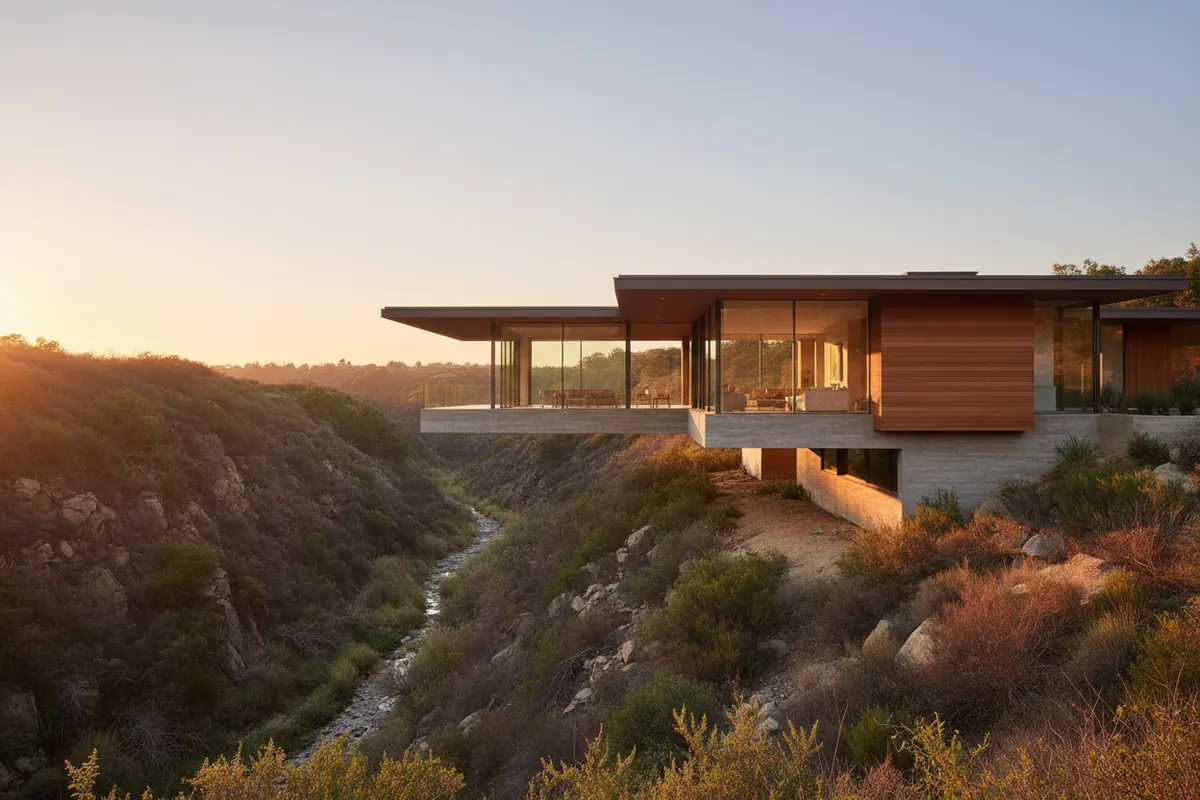
A custom home valuation is a reviewed estimate of what a one-of-a-kind house would likely sell for today. A person looks for the closest sales available and adjusts each one for differences in size, lot, quality and features. It is a local market review, not an appraisal and not an instant online number.
On this page
Key Takeaways
- The core problem is scarce comparables. A custom-built house in San Diego County often has few or no truly matching sales nearby.
- Online estimates struggle most here. Automated valuation models (AVMs) depend on similar recent sales; when there are none, their number can drift far from what a buyer would pay.
- A local market review adds human judgment. Often called a comparative market analysis or CMA, it is a reviewed estimate of market value, meaning the likely price in a sale between a willing buyer and seller today, with comparable sales selected and adjusted by a person.
- It is not an appraisal or assessed value. An appraisal and the county's assessed value serve different purposes.
- The purpose of the value decides which kind is needed.
When This Option Fits
A local market review fits situations where the owner needs a reasoned number for planning, not a document for a lender or a court. Common examples include:
- Pre-sale pricing research. An owner deciding whether and when to sell wants a grounded sense of value before talking list price. A pre-listing home valuation follows the same logic.
- A refinance conversation. Knowing the likely market value helps an owner understand equity before speaking with a lender, though the lender will usually order its own appraisal.
- Early estate or trust planning. A trustee or family member may want a working figure before any formal valuation is required.
- The early stage of a divorce. Spouses gathering information often start with a market review before deciding what the process calls for.
- Property tax research. An owner comparing assessed value to market value may start with a review.
A formal appraisal, rather than a market review, is typically what is called for when a mortgage lender needs a value, when a divorce court or lender asks for a formal opinion of value, or when an estate's federal tax reporting depends on a value. In those settings a market review is not a substitute. San Diego Home Appraisal & Valuation does not appraise property or set any home's value, and a review is not the starting point where a court or lender has already said it requires an appraisal.
How It Works, Step by Step
The process for a custom home follows the same outline as any local market review, with more care at the comparable-sales stage.
Step 1: Gathering property details. The reviewer starts with the house itself: living area, lot size, year built, construction quality, notable features such as views, outbuildings or acreage, and any recent improvements. For a custom home, these details carry more weight than usual, because they are what set it apart.
Step 2: Identifying comparable sales. Comparables, or "comps," are recent sales of similar homes. Because a custom home has few direct matches, the reviewer usually widens the search to a larger area and may reach back further in time than a standard CMA would. A Del Mar home might be compared with sales in nearby coastal communities; a home on acreage in Jamul might be compared with rural properties across a broader part of the East County. Appraisal for unique homes works through a similar challenge in the formal setting.
Step 3: Applying adjustments. No comparable is identical, so each difference is accounted for: a larger lot, an extra bedroom, a newer roof, a better view. Formal residential appraisals use a structured adjustment grid, and that same way of reasoning informs a careful market review, even though the review is not an appraisal.
Step 4: The reviewed estimate. The result is a written or documented estimate, given as a range or a single figure, with the comparable sales and adjustments shown so the owner can see how the number was reached.
Throughout, the judgment comes from a person reading the local market, not from a model.
Costs, Timing and Trade-offs
What a custom home review involves, and how long it takes, depends on the property. A house with unusual features, a large or irregular lot, or a location where sales are rare takes more work to match and adjust. The part of San Diego County matters too: finding comparables for a backcountry property near Alpine is a different task from finding them for a home in a denser suburban neighborhood. Home appraisal cost describes the factors that shape a formal appraisal fee.
A local market review is generally less involved than a formal appraisal. It does not require the same formal inspection, report format or credentialed signature. That difference cuts both ways.
The benefit is a reasoned, human-reviewed estimate that an owner can use for planning, pricing discussions and negotiation. The limit is weight. A lender, a probate court or a federal tax filing that requires an appraisal will not accept a market review in its place. An owner who later needs an appraisal for one of those purposes will still need one.
The trade-off is less about which is better and more about matching the tool to the job. A review answers "what is this house likely worth" for the owner's own decisions; an appraisal answers it for an institution that has its own standards.
Options to Compare
Four kinds of value come up for a custom home. Each has a real use and real limits.
| Option | What it is | Typical use | Main limit for a custom home |
|---|---|---|---|
| Local market review (CMA) | A reviewed estimate of market value from comparable local sales | Pricing research, planning, early estate or divorce stages, tax research | Not accepted where a lender, court or tax filing requires an appraisal |
| Formal appraisal | A formal opinion of value by an appraiser credentialed by the California Bureau of Real Estate Appraisers | Mortgage lending, many divorce and tax matters | More involved and generally costs more than a review |
| AVM / online estimate | A computer-generated figure from sales data and public records | A rough starting point | Few comparable sales means little data; unique features and condition go unseen |
| Assessed value | The San Diego County Assessor's taxable value under Proposition 13 | Property tax | Not a measure of current market value |
A few further points:
- Why judgment matters for a review. A person can recognize that a hand-built Rancho Santa Fe estate and a tract home on the same street are not the same product.
- What an appraisal adds. The appraiser inspects the property and prepares a report in a recognized format, which is why lenders and courts rely on it.
- What an AVM misses. It sees square footage and recorded sales, but not a custom kitchen, an ocean view in La Jolla, a deferred repair or a guest house. For a home with few matching sales, it is usually the least dependable figure. How accurate are home value estimates explains why these numbers miss.
- Why assessed value lags. Proposition 13 limits how much assessed value can rise from year to year while an owner holds a property, so for a custom home owned for many years, the assessed figure can sit well below current market value. It reflects tax rules, not what a buyer would pay.
What to Have Ready
A reviewer can only adjust for what is known about the house. Having the following on hand helps the review start from accurate facts:
- The property address and assessor's parcel number. The parcel number, or APN, is the county's identifier for the lot. It appears on the property tax bill and in the records of the San Diego County Assessor-Recorder-County Clerk.
- Year built, living area and lot size. County records list these, though owners of custom homes sometimes find the recorded figures do not match the house as it stands today.
- Significant improvements or additions. A list of major work, with approximate dates and costs where known, helps explain differences from comparable sales.
- Prior appraisals, inspection reports and permits. Earlier reports and permit records give a reviewer a documented history of the house.
- The reason for the value. A sale, refinance, estate, divorce or property tax review each points toward a different set of relevant comparables and time windows. A value needed as of a past date, such as a date of death, raises a different question; a retrospective home appraisal addresses that case.
For an heir, executor or trustee, some of these papers may sit in a parent's files rather than the owner's own. Gathering what can be found, and noting what cannot, is still useful.
Local Context: Custom Homes in San Diego County
San Diego County holds an unusually wide range of custom homes. Along the coast, La Jolla and Del Mar have hillside and bluff-top houses where views, lot shape and architecture vary from one parcel to the next. Rancho Santa Fe has large estate lots with homes built over many decades. Inland and in the backcountry, Ramona, Alpine and Jamul have custom houses on acreage, often with barns, wells, guest quarters or other improvements that few neighboring sales share. In each of these places, two homes on the same road can be very different products, and recent comparable sales may be scarce.
The San Diego County Assessor-Recorder-County Clerk keeps property records, assessed values and ownership history for parcels across the county. Those records are a practical starting point for confirming the parcel number, the recorded living area and lot size, and the assessed value, and for noting whether the recorded size and features match the house as it stands in Jamul, Del Mar or wherever it sits. In long-held areas such as La Jolla, Ramona or Rancho Santa Fe, the gap between the recorded assessed value and likely market value can be wide.
Take the next step
Ready to take the next step with your property?
Answer a few questions and receive a reviewed market value estimate for your property.
How it works
- The propertyIts address, type, size, bedrooms and bathrooms.
- Its conditionFrom recently updated to needing significant work.
- Your reasonCurious, selling, refinancing or planning an estate.
Take the next step
How we work
- Every request is reviewed by a person. Nothing on this site calculates a value automatically.
- Appraisals are prepared by independent, state-licensed or certified appraisers, never by this website.
- Estimates and cash offers are clearly labeled — never presented as appraisals.
- A request does not commit you to anything.
Frequently asked questions
How do I calculate the value of a custom home?
A custom home's value is estimated from the closest comparable sales available, often drawn from a wider area or a longer time window than usual, with each sale adjusted for differences in size, lot, condition and features. Because few sales match, a person reviews the data rather than relying on an algorithm.
How close is an online estimate (like Zillow) to a custom home's actual value?
The gap can be large. Online estimates are built from mathematical models and public records, so they cannot see a home's condition or unique features. For a custom home with few comparable sales, that missing information can move the estimate well away from what a buyer would likely pay.
What is the difference between a custom home valuation and a home appraisal?
They serve different purposes and are not interchangeable. A custom home valuation is a reviewed market estimate for planning, pricing or information. An appraisal is a formal opinion of value by an appraiser credentialed by the California Bureau of Real Estate Appraisers, and it is what lenders and many legal matters call for; in a probate, the appraisal of property in the inventory "shall be made by the personal representative, probate referee," or an independent appraiser, as the Probate Code provides.
What is the difference between assessed value and market value for a custom home in San Diego County?
Assessed value is the San Diego County Assessor's taxable figure under Proposition 13, which limits yearly increases while an owner holds the property. Market value is what a buyer would likely pay today. For a long-held custom home, the two can differ substantially.
When does a custom home need a formal appraisal instead of a market review?
When a lender, a probate court, a divorce court or a federal tax filing calls for a formal opinion of value, an appraisal is typically what is needed. A market review fits pre-sale research, early estate planning or property tax research. The purpose of the value decides which applies.
What information does a reviewer need to value a custom home?
A reviewer typically needs the address and assessor's parcel number, year built, living area, lot size, details of major improvements, any prior appraisals, inspection reports or permits, and the reason for the value. These details shape which comparable sales and adjustments are relevant.
Is it cheaper to get a market review or a formal appraisal for a custom home?
A market review is generally less involved than a formal appraisal and usually costs less, but it carries less weight with lenders, courts and tax authorities. Which one fits depends on what the value will be used for, not only on cost.