You own a newly built home in San Diego County, or you are about to close on one, and a question about its worth has come up. You may be selling soon after closing, considering a refinance, listing the home in an estate or trust inventory, dividing property in a divorce, or trying to make sense of a property tax bill. A builder's price list and an online number may not agree, and neither one explains why. This page lays out what a market review of new construction involves, how comparable sales are chosen and adjusted, when a review fits and when another tool is required, and what to gather first.
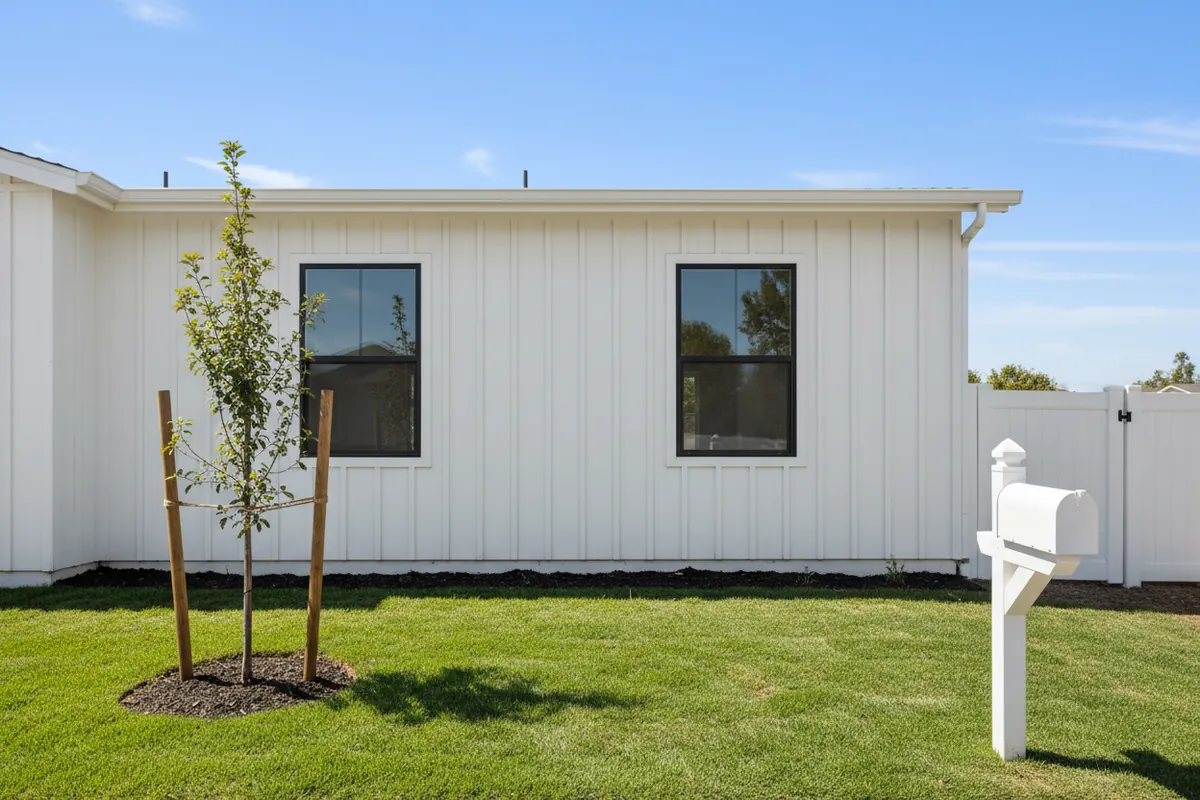
New construction valuation is a reviewed estimate of what a newly built home would likely sell for. It rests on recent comparable sales and local market conditions. It is a local market review, sometimes called a comparative market analysis or CMA. It is not an appraisal and not an instant online estimate.
On this page
Key Takeaways
- Local market review (CMA). A reviewed estimate of market value for a home, built from recent sales of similar homes nearby and current market conditions. It is an informed estimate, not a formal opinion of value.
- Appraisal. A formal opinion of value prepared by an appraiser, a person who holds a state credential to appraise real property. Lenders and courts rely on appraisals, and a market review cannot stand in for one.
- Assessed value. The value the San Diego County Assessor sets on a property for property tax purposes. California's Proposition 13 framework governs how that value is set, and newly completed construction is part of that process. Assessed value is a tax figure, not a market estimate.
- Contract price. The price a buyer agreed to pay the builder. It records one sale on one set of terms, which may include incentives. It is not an independent valuation.
When This Option Fits
A market review is useful when an owner wants an informed sense of market value and no lender or court is asking for a formal report. Common situations include:
- Pricing before a sale. An owner selling a recently built home can see how it compares to resales and to new homes still offered by builders. A pre-listing home valuation follows a similar approach for any home.
- Before a refinance. An owner can get a sense of value before applying, knowing the lender will order its own appraisal.
- Estate, trust or probate inventory. An executor or trustee may want an early picture of value while deciding what formal report the matter needs.
- Divorce. Spouses may want a starting point before a formal divorce real estate appraisal is arranged.
- A property tax question. An owner can compare an assessed value with market evidence before raising a question with the Assessor's office.
When a mortgage, a court case or a probate proceeding calls for a formal report, that is appraisal territory.
New construction brings its own difficulties. A new subdivision may have few resales yet. Builder incentives, such as closing-cost credits or included upgrades, can make the posted price differ from what the buyer actually paid. And the contract price is not the same thing as market value.
If a value is in dispute with a lender, a builder, a co-owner or in court, that is a different matter, and it is handled by an attorney or an appraiser.
How It Works, Step by Step
A market review of a newly built home generally moves through four stages.
- The property. The review starts with the property address and basic details about the new construction.
- Comparable sales. The review looks at recent sales of similar homes in the same part of San Diego County, including other new construction where such sales exist. Where nearby new-home sales are thin, it draws on resales and on sales from neighboring communities, with adjustments for location, size and features.
- Market context. Builder incentives, lot premiums (an extra charge for a larger, corner or view lot), upgrades and community factors are considered. Those factors include homeowners association dues and special district charges, where they apply. They can make two homes with the same floor plan sell at different prices.
- The finished review. The result is a local market review or CMA, a reviewed estimate of market value. It is not an appraisal and is not an instant algorithmic figure.
How lot premiums, incentives and upgrades shape the comparison
The comparison only works when each sale is read for what it actually included. Two homes on the same plan can close at different prices for reasons that have little to do with the house itself, so the review looks past the headline price of each comparable sale.
A lot premium reflects the lot, not the home. When a comparable sat on a corner, view or larger lot and the subject home did not, or the reverse, that difference is accounted for so the comparison is lot to lot as well as plan to plan. Builder incentives, such as closing-cost credits or included upgrades, mean a posted price can overstate what a buyer paid. A sale with heavy incentives is read with those concessions in mind, so the comparison reflects the effective price rather than the list figure. Upgrade packages are treated as features of the home: a comparable with added options is compared against the options in the subject home, so a base-plan sale and a heavily upgraded sale are not treated as equal.
When nearby new-home sales are scarce, the same reasoning carries over to resales and to sales from neighboring communities, with location, size and features weighed alongside the lot, incentive and upgrade differences above.
Costs, Timing and Trade-offs
A market review is less formal than an appraisal, and that is both its use and its limit. It gives an owner an informed estimate without the scope of a formal appraisal report, but it does not take the place of one where a lender or court is involved. Cost and timing for any review or appraisal depend on the property, its location and the purpose of the work. The factors that shape an appraisal fee are covered under home appraisal cost.
When a buyer finances a new home, the lender orders its own appraisal. That appraisal is independent of the builder's price. The loan documents and the lender's disclosures show who pays for it on a particular loan. If the appraisal comes in below the contract price, the buyer, the builder and the lender have a gap to resolve. How a new construction appraisal works for a lender is a separate question from a market review.
Property tax runs on its own track. Once new construction is completed, the San Diego County Assessor handles its assessment, including any supplemental assessment, which is an added assessment reflecting the change in value. The Assessor's office handles that process on its own, whatever a market review or appraisal may show.
Options to Compare
Each tool answers a different question.
| Option | Who orders it | What it is used for | What it does not do |
|---|---|---|---|
| Local market review (CMA) | The owner | An informed estimate of market value for pricing, planning, an early estate or divorce picture, or a tax question | It does not serve as a formal report for a loan or a court matter |
| Appraisal ordered by a lender | The lender | Supporting a mortgage loan decision | It is prepared for the lender's purpose, not the owner's planning |
| Appraisal ordered independently | The owner, an executor, a trustee or a party to a divorce | A formal opinion of value for a sale, an estate, a trust, a divorce or a private sale | A lender may still require its own appraisal for a loan |
| Assessed value | Set by the San Diego County Assessor | Calculating property tax | It is not a measure of market value |
The builder's asking price or contract price belongs to none of these categories. It is the builder's price for a sale, not an independent estimate. Situations with few comparable sales, such as a custom home, raise the issues discussed under appraisal for unique homes. Each option has its place, and the owner's purpose decides which one applies.
What to Have Ready
A review is more useful when the details of the home are gathered first.
- Property address and APN. The Assessor's Parcel Number identifies the parcel on county records and appears on the property tax bill.
- Builder, community and plan. The builder's name, the community or subdivision name, and the model or plan name, if there is one.
- Purchase contract or sales price. If the home was bought recently, the contract and the final price.
- Upgrades, lot premiums and incentives. A list of options added, any lot premium charged, and any builder credits or incentives in the purchase. These are the details that let the comparison above be done accurately.
- Existing reports. Any prior appraisal, inspection report or title document, if available.
The San Diego County Assessor-Recorder-County Clerk's records may show the current assessed value and recent transfer history for the parcel.
Local Context: New Construction in San Diego County
New homes in San Diego County range across coastal, inland and North County submarkets, and each offers a different supply of comparable sales. In South County, a home in Otay Ranch or Eastlake in Chula Vista may sit among several builder phases, so new-home sales and early resales can be compared directly. East County homes in Santee, El Cajon or Rancho San Diego may have fewer close matches, so a review reaches into surrounding neighborhoods. In North County, a newly built home in San Marcos, Escondido or Oceanside may be compared against both nearby subdivisions and older resales. Some communities are newer than others, and Otay Ranch, Eastlake and San Marcos homes can differ by phase, lot and builder even within one area.
Two public offices matter here. The San Diego County Assessor-Recorder-County Clerk handles property assessment records for parcels across San Diego County, including the assessment of completed new construction and supplemental assessments. The California State Board of Equalization publishes statewide guidance on how new construction is defined and assessed for property tax purposes under Proposition 13. Questions about a specific assessment belong with the Assessor's office.
A practical first step for many owners is finding the APN on the property tax bill or purchase documents and looking up the parcel's assessment record with the San Diego County Assessor-Recorder-County Clerk. Pulling the purchase contract's list of incentives and upgrades at the same time shows what the price actually included.
Take the next step
Ready to take the next step with your property?
Answer a few questions and receive a reviewed market value estimate for your property.
How it works
- The propertyIts address, type, size, bedrooms and bathrooms.
- Its conditionFrom recently updated to needing significant work.
- Your reasonCurious, selling, refinancing or planning an estate.
Take the next step
How we work
- Every request is reviewed by a person. Nothing on this site calculates a value automatically.
- Appraisals are prepared by independent, state-licensed or certified appraisers, never by this website.
- Estimates and cash offers are clearly labeled — never presented as appraisals.
- A request does not commit you to anything.
Frequently asked questions
Who pays for the appraisal on a new construction home?
On a financed purchase, the lender orders the appraisal, and the loan documents and the lender's disclosures show who pays for it on that loan. That appraisal is separate from a local market review, which the owner seeks out for planning purposes.
Is the builder's contract price the same as the appraised value?
No. The contract price is what the buyer agreed to pay the builder, often shaped by incentives, upgrades and lot premiums. An appraised value is an independent opinion of market value. When a lender's appraisal comes in below the contract price, the buyer, the builder and the lender have a gap to resolve.
How does the San Diego County Assessor value new construction for property taxes?
The San Diego County Assessor assesses newly completed construction under California's Proposition 13 framework, and the resulting assessed value is used for property tax. The Assessor-Recorder-County Clerk and the State Board of Equalization publish the current rules. Questions about a particular parcel go to the Assessor's office.
What is a supplemental assessment and when does it apply to new construction?
A supplemental assessment is an added assessment reflecting a change in a property's assessed value, such as the completion of new construction. The San Diego County Assessor handles the process. The Assessor-Recorder-County Clerk publishes how and when it applies to a given parcel.
Can I negotiate the price of a new construction home?
That depends on the builder. Some builders discuss lot premiums, upgrades or closing-cost contributions rather than the base price, and practice varies by community and phase. A local market review can give context about comparable sales nearby, though it does not tell a buyer what to offer.
What is the difference between a local market review and a formal appraisal for new construction?
A local market review is a reviewed estimate of market value based on comparable sales and market conditions, used for planning and pricing. An appraisal is a formal opinion of value prepared by an appraiser, and it is what a mortgage lender or a court proceeding relies on.
How is new construction valued when there are few comparable sales nearby?
A review reaches beyond the immediate subdivision. It draws on sales from nearby San Diego County communities and on resales, adjusting for location, size and features, and for differences in lot premiums, incentives and upgrades. Thin comparable sales are a known difficulty with new construction, especially in a community's early phases.
Does Proposition 13 apply to newly built homes in San Diego County?
Yes. Proposition 13 is the framework under which the San Diego County Assessor assesses newly built homes. The State Board of Equalization publishes statewide guidance on how new construction is assessed, and the Assessor's office answers questions about a specific parcel.