Skip to content
San DiegoHome Appraisal & Valuation

California

Home Value With ADU

Updated November 17, 2026

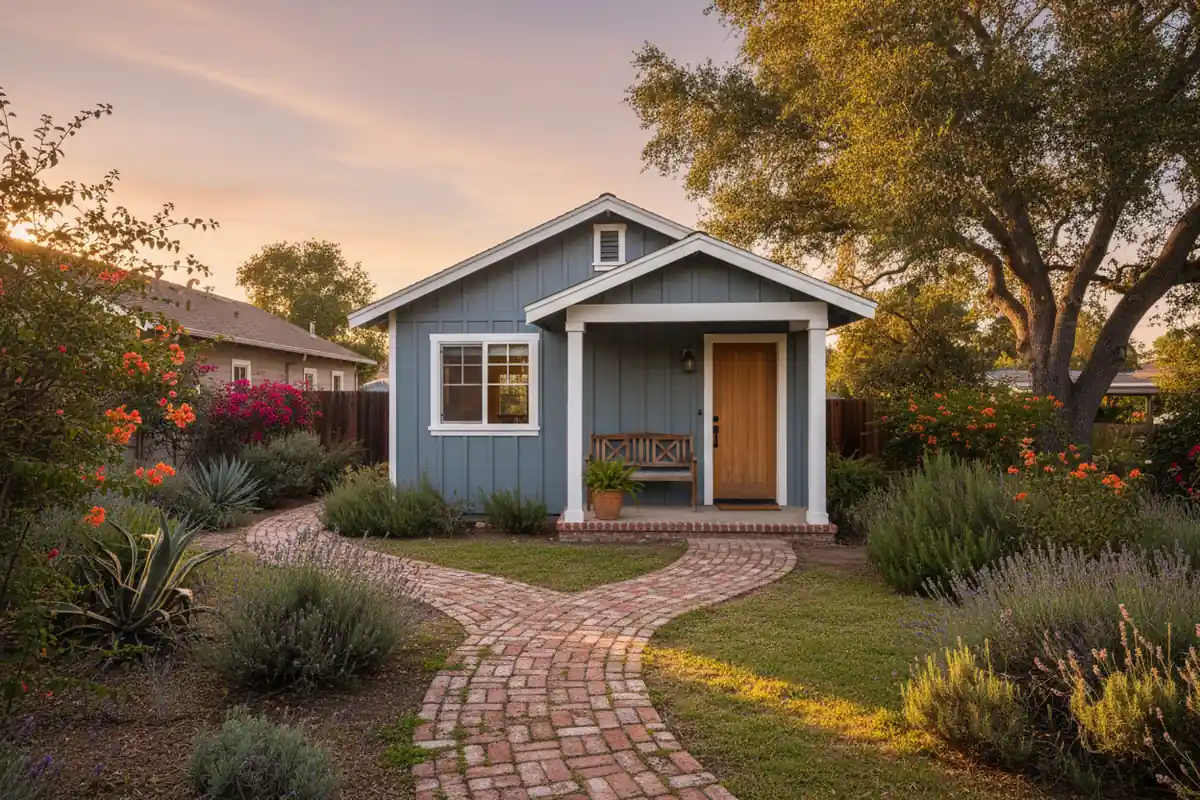
A detached garden cottage reached by a brick path, adding space and rental income.
Immediate answer

An accessory dwelling unit can raise a home's market value in two ways: it adds living space, and it can produce rental income. How much it adds is not fixed. It depends on whether the unit was permitted, its size and condition, and what buyers in that part of San Diego County have paid for similar properties with ADUs.

On this page
  1. What It Means for Owners
  2. Who It Affects
  3. Rules, Disclosures and Fine Print
  4. Options and Trade-offs
  5. Mistakes to Avoid
  6. What to Do Next
  7. Frequently asked questions

An owner with a backyard cottage, a converted garage or a unit built onto the house often reaches this question at a turning point: a sale, a refinance, a divorce, or the settling of a parent's estate. The unit may have cost a great deal to build, or it may have come with the property and never been examined closely. Either way, the owner, heir, executor, trustee or spouse now needs a value that will hold up, and needs to know how that second unit is counted.

This guide walks through what an ADU means for a property's value, who faces the question, the fine print that decides how a unit is treated, the options an owner has, and the mistakes that tend to cause trouble.

What It Means for Owners

An accessory dwelling unit, or ADU, is a second home on the same lot as a primary residence, with its own kitchen, bathroom and sleeping area. That separate, self-contained quality is what sets it apart from a spare bedroom or a finished basement, and it is why an appraiser looks at it differently.

ADUs in San Diego County take several forms:

  • Detached ADU. A separate structure, such as a backyard cottage.
  • Attached ADU. A unit joined to the main house but living as its own home.
  • Garage conversion. A garage turned into either a full ADU or a smaller junior unit.
  • Interior conversion. Space inside the existing house turned into a separate unit.

Each form tends to affect value in its own way. A detached unit with its own entrance and yard reads differently to buyers than a converted room off the hallway.

ADU valuation turns on two contributions. The first is added livable square footage. The second is rental income the unit produces or could produce. An appraiser, meaning a professional who forms an opinion of market value, considers both, and how much each counts depends on what local buyers have shown they will pay.

Financing adds another layer. Fannie Mae, which buys many home loans from lenders, publishes single-family guidelines that treat a property with an ADU differently from a standard single-family home, and lenders and their appraisers follow those guidelines when a loan is involved.

The result is that no two ADUs add the same amount. The local market, the unit's condition, its permitted status and its income potential all shape the answer.

Who It Affects

Sellers meet this question first through the buyer's lender. When a buyer finances the purchase, the lender orders an appraisal, and how that appraisal treats the ADU affects the loan amount and, in turn, whether the sale holds together at the agreed price. The gap between market value and a seller's opening number is a separate point, explored in more depth in home value versus asking price.

Owners refinancing face a similar test. The lender's appraisal has to support the new loan amount. A unit that is unpermitted or unfinished may not be credited, which can leave the appraised value below what the owner had in mind.

Spouses in a divorce often need the property's fair market value, including the ADU, where all or part of the home is community property. An appraisal is commonly used to set that figure, and a family law attorney can explain how the value is used in the case.

Heirs, executors and trustees deal with date-of-death value, meaning the property's market value on the date the owner died. An estate or probate appraisal has to reflect what the ADU contributed to value on that date, not what it might add after later repairs or upgrades.

Property tax is the last group. Adding an ADU is new construction, and in California new construction is generally assessed on its own while the existing home's assessed value carries forward. The San Diego County Assessor's office administers this and publishes how it applies and the current figures; a question about a particular property's assessment goes to that office.

Rules, Disclosures and Fine Print

Permitted status is the threshold question. An ADU built with permits that were finaled, meaning signed off by the building department, is generally treated as legal living space. A unit built without permits may not be credited in an appraisal, and its status becomes something a seller has to disclose.

California has streamlined ADU permitting statewide, and the California Department of Housing and Community Development is the state agency that oversees the state's ADU framework. State law sets the floor; local governments apply it. In San Diego County, the county handles permits for the unincorporated areas, and each incorporated city handles permits within its own limits. The County of San Diego's planning and building pages on sandiegocounty.gov publish the current rules for unincorporated property, and a city's building department publishes its own.

A junior accessory dwelling unit, or JADU, is a separate category under California law. It is smaller than a full ADU and is typically created within the existing structure of the home, often with an efficiency kitchen and its own entrance. A JADU follows different permitting rules than a full ADU, and an appraiser treats it as its own kind of improvement.

Disclosure is a general duty in a California home sale: a seller is expected to disclose known material facts about the property, and an ADU's permit status is the kind of fact that can matter to a buyer. Exactly which forms and statements apply in a given sale is a question for a real estate agent or a real estate attorney.

For loans that follow Fannie Mae's single-family guidelines, published at singlefamily.fanniemae.com, the appraiser identifies the ADU and looks for comparable sales of properties that also have ADUs. Where such sales are scarce nearby, the unit's contribution is harder to measure and the appraisal reflects that.

Options and Trade-offs

Each path below has a cost and a benefit. None is the answer for every property, and the choice depends on the owner's timing, finances and what the records show about the unit.

Selling with a permitted ADU. The unit is disclosed, the appraiser can credit it, and comparable ADU sales in the area support its value. The trade-off is mostly about pricing: a value set without good comparables can still be questioned by a buyer or a lender.

Selling with an unpermitted ADU. The property can be sold in its present condition, with the unit's status disclosed. The unit may be credited at less than full value or not at all, and a buyer may ask for permits as a condition of the sale or negotiate the price down.

Permitting before a sale. Bringing the unit through the permit process takes time and money, and the work the building department requires is not known in advance. In return, a permitted unit may be credited in the appraisal and leaves a buyer less room to negotiate over its status.

Using ADU rent in a refinance. Lenders may count documented rental income from a permitted ADU toward the owner's qualifying income, under the guidelines the loan follows. An appraisal is part of that process, and a lender or loan officer can say what documentation it accepts.

Getting an appraisal first. An owner who wants to understand the ADU's contribution before choosing among these paths can request an appraisal quote through San Diego Home Appraisal & Valuation. An owner more focused on overall equity may look at a home equity value review as a starting point.

Comparing written figures, such as estimated net proceeds after commissions, permit and repair costs, loan payoffs and closing costs, is how an owner tells which path fits the property.
Mistakes to Avoid

Online estimates are a frequent source of confusion. An automated valuation model, or AVM, is a computer estimate built from public records and recent sales. It often misses an ADU, especially one that does not appear in public records, so the number may describe a house without its second unit. The limits of these tools are covered further in home value calculators and home value estimate accuracy.

A comparative market analysis, or CMA, is another source of mix-ups. It is a real estate agent's pricing opinion based on nearby sales. It can help set a listing price, but it is not an appraisal and does not serve the same purpose for a lender, a court or an estate.

A fixed percentage is a tempting shortcut. No set rule says an ADU adds a certain share to value. The contribution depends on the San Diego County submarket, the unit's size and condition, its permitted status and the comparable sales available. The same logic applies to any improvement, as explained in home value after renovation.

Property tax can come as a surprise. Because an ADU is new construction, a reassessment of that construction follows, and some owners learn of it only after the permit is finaled.

Finally, an ADU's contribution to value is a question of fact, not an assumption. A sale, refinance or estate distribution that relies on a guess about the unit, rather than an appraisal that addresses it directly, can be revisited later by a buyer, a lender, a court or another heir.

What to Do Next

Two facts shape everything else on this page: whether the ADU was permitted, and what a qualified appraiser finds the unit contributes. Permit records are kept by the building department that covers the property, which is the County of San Diego for unincorporated areas and the city's own building department elsewhere in the county.

When the purpose is a sale, a refinance, a divorce or an estate matter, an appraisal that addresses the ADU specifically is the dependable way to set market value, because it draws on comparable sales of properties with similar units. This site does not give legal, tax or appraisal advice and does not set a property's value; an appraiser forms the value opinion, and an attorney or the Assessor's office answers legal and tax questions.

A practical next step is to locate the ADU's permit history and final inspection sign-off, and to compare it with how the property is described on the San Diego County Assessor's records, so any gap between the two is known before an appraisal begins.

Take the next step

Ready to take the next step with your property?

Answer a few questions and receive a reviewed market value estimate for your property.

How it works

  1. The propertyIts address, type, size, bedrooms and bathrooms.
  2. Its conditionFrom recently updated to needing significant work.
  3. Your reasonCurious, selling, refinancing or planning an estate.

How we work

  • Every request is reviewed by a person. Nothing on this site calculates a value automatically.
  • Appraisals are prepared by independent, state-licensed or certified appraisers, never by this website.
  • Estimates and cash offers are clearly labeled — never presented as appraisals.
  • A request does not commit you to anything.

Frequently asked questions

How much value does an ADU add to a home in San Diego County?

No fixed amount or percentage applies. The contribution depends on the unit's size, condition and permitted status, and on comparable ADU sales in the specific submarket. An appraisal built on those comparables is the dependable way to measure it, as described under Mistakes to Avoid.

Is it harder to sell a house with an ADU?

A permitted ADU often broadens appeal to buyers who want rental income or room for extended family. An unpermitted unit can complicate a sale, because the seller discloses it and the buyer's lender may not credit it in the appraisal. Permitted status is the main variable.

What are the ADU laws in California that affect San Diego County?

California sets statewide rules that streamline ADU permitting, overseen by the Department of Housing and Community Development. Local governments apply them: the county for unincorporated areas and each city within its limits. Current county rules are published on sandiegocounty.gov.

Does adding an ADU trigger a property tax reassessment?

Yes, adding an ADU is new construction, which is generally assessed while the existing home's assessed value carries forward. The San Diego County Assessor's office administers reassessment and publishes how it applies and the current figures.

How does an appraiser value a home with an ADU?

An appraiser looks for comparable sales of nearby properties with ADUs and considers the unit's size, condition and permitted status, along with income it produces or could produce. For many loans, Fannie Mae's guidelines shape that process. The result is a value opinion, not a formula.

Does an online home value estimate account for an ADU?

Often it does not. An AVM is a statistical estimate drawn from public data, and a unit missing from public records may be left out. It is not an appraisal; an appraisal that addresses the ADU gives a more dependable picture.

What is a JADU and how is it valued differently from a full ADU?

A JADU is a smaller unit created within the existing home, often with an efficiency kitchen and its own entrance. California law treats it as a separate category with different permitting rules. An appraiser values it against comparable sales, and its contribution is typically smaller than a full detached ADU's.