For a San Diego County owner, heir, executor, trustee or spouse, the question usually comes with a date attached. A listing is coming up, a lender has ordered an appraisal, a marital settlement needs a number, or an estate has to be valued as of a date of death. The panels on the roof seem like they should count for something. What is unclear is how much they count, and whether the paperwork behind them helps or gets in the way. This guide explains how an appraisal treats solar, what turns on ownership, and where the fine print sits.
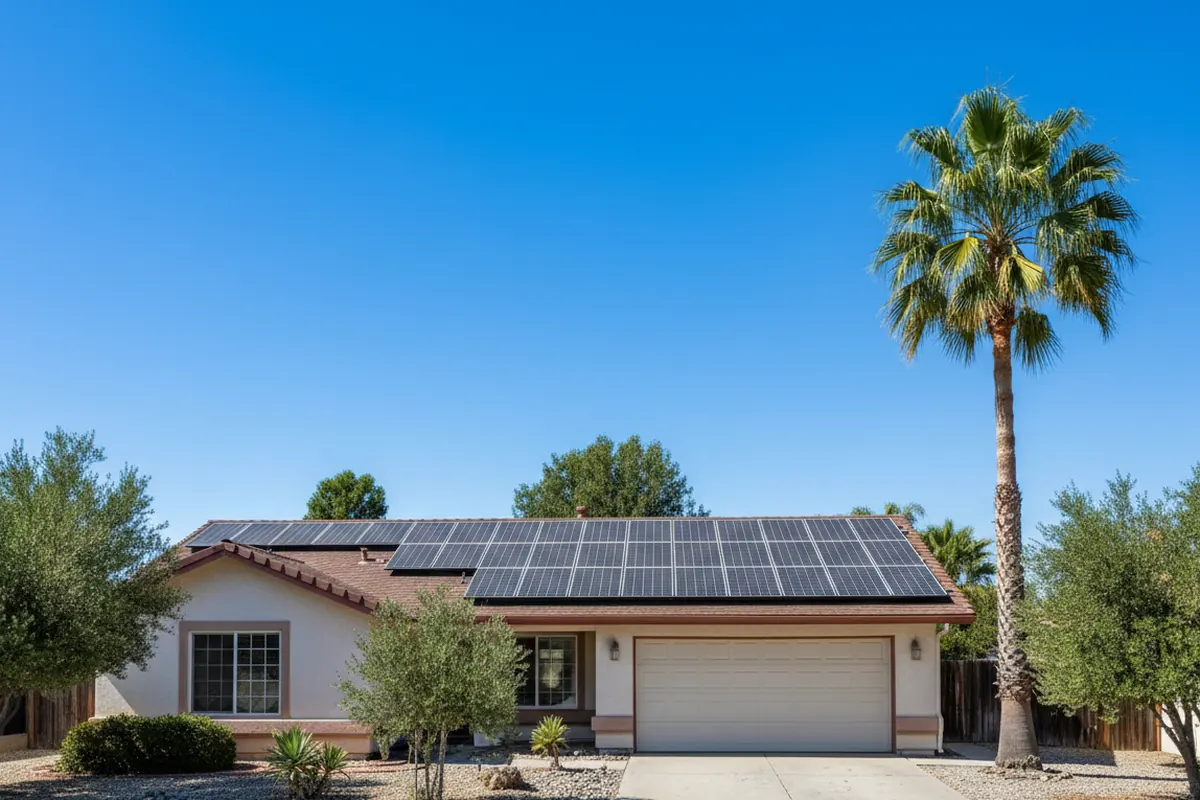
Solar panels can add to a home's market value, but only if the owner owns the system and only to the extent that nearby sales show buyers pay more for it. A leased system or a power purchase agreement is a contract a buyer takes on or the seller pays off. It is not part of the home. No fixed dollar amount or percentage applies.
On this page
What It Means for Owners
Ownership status decides almost everything. An owned system is a permanent improvement to the real property, meaning it is attached to the house and conveys with it, like a roof or a water heater. An appraiser analyzes an owned system as part of the home.
A leased system works differently. So does a power purchase agreement (PPA), in which a solar company owns the panels and the homeowner pays for the power they produce. Both are contracts with a third party. When the house sells, the contract has to be assumed by the buyer or paid off. Because the homeowner does not own the equipment, a leased system or PPA is generally not treated as adding to the home's value. Lenders often look at it as an obligation. Fannie Mae's Selling Guide addresses solar panels directly. It is the guidance lenders and appraisers consult for loans sold to Fannie Mae.
For an owned system, any added value is market-derived. An appraiser looks at comparable sales: recent sales of similar homes nearby, some with solar and some without. Where the data allows, the appraiser uses paired-sales analysis, which compares two otherwise similar homes to isolate what one feature contributed. The Appraisal Institute publishes methodology on valuing green and energy-efficient features along these lines.
Local context matters. San Diego County gets strong sun, and SDG&E's electricity rates are high. Both make solar a more visible feature here than in many places. Still, a home valuation after solar installation reflects what local buyers have paid. The cost of the panels does not set it. For the same reason, online home value calculators often miss this feature.
Who It Affects
Sellers. A buyer who finances the purchase will have a lender order an appraisal. How the appraiser treats the system depends on whether it is owned or leased, and on what comparable sales in that neighborhood show.
Refinancing owners. The same process applies. The lender's appraiser follows Fannie Mae or whichever agency guidelines govern the loan. An owned system is analyzed as part of the home. A lease or PPA comes up during underwriting as an obligation.
Spouses in a divorce. A home valued for a marital settlement still needs the solar question answered. The appraiser needs to know whether the system is owned or whether a lease runs with the house. Whether an owned system is community or separate property is a legal question for a family law attorney. The appraiser values what is there.
Estates, probate and trusts. A date-of-death or trust-administration appraisal treats solar the way a sale appraisal does. Ownership or lease status still governs. An heir or executor may have to find the solar contract among the decedent's papers before the appraiser can finish.
Property tax. California property tax law includes a new-construction exclusion for qualifying active solar energy systems. Where it applies, adding an owned system may not lead to a reassessment of the home. The State Board of Equalization publishes statewide guidance, and the San Diego County Assessor administers the exclusion locally. The Assessor's office can confirm whether a particular installation qualifies, along with current conditions and limits.
Rules, Disclosures and Fine Print
Three sets of rules come up most often: lender appraisal guidelines, seller disclosure, and installation and utility rules.
Lender guidelines. For loans sold to Fannie Mae, the Selling Guide sets out how solar is handled in an appraisal. That includes documenting the system on a solar or energy addendum to the appraisal report. For a leased system, the appraisal and loan file note the lease terms and whether a buyer can assume the lease. Those terms can affect how marketable the home is and, in some cases, its appraised value. Fannie Mae publishes the current wording, and it controls over any summary.
Disclosure. California sellers owe buyers disclosures about the property. A solar lease or PPA that will transfer with the house is the kind of contract a buyer needs to know about before committing. The details of what is owed and when fall to a real estate attorney or the transaction paperwork.
Installation and permits. The California Contractors State License Board oversees the contractors who install solar systems. Solar work also requires local building permits. A system installed without proper permits can complicate an appraisal, a title review and a lender's approval.
Net billing. California's net energy metering rules have changed. The current net billing tariff, sometimes called NEM 3.0, affects how SDG&E credits the power a system sends back to the grid. The California Public Utilities Commission sets these tariffs. Export credits are part of what a buyer or appraiser considers when estimating a system's financial benefit, and they reflect whichever rules applied when the system was connected.
Options and Trade-offs
Selling with an owned system. The system conveys as part of the real property, and the appraiser analyzes it. Whether the market shows a premium depends on comparable sales nearby. In some neighborhoods the data is clear. In others it is thin, and the appraiser has less to measure from.
Selling with a leased system or PPA. Either the buyer qualifies to assume the contract, or the seller pays it off before closing. An assumption depends on the buyer and the solar company agreeing, which can add steps to the sale. A payoff comes out of the seller's proceeds. Both paths affect net proceeds, meaning the price less commissions, payoffs and closing costs.
Buying out a lease before listing. A buyout removes the contract question from the sale and turns the system into owned equipment. It also costs money up front. Whether a higher sale price recovers that cost depends on what local buyers pay for homes with owned solar. Comparing the buyout figure in the lease against an appraisal or a market review is how an owner tests the numbers.
Refinancing with solar. An owned system may support the appraised value when comparable sales show buyers pay for it. A leased system appears in underwriting as a monthly obligation that the lender reviews along with the borrower's other debts. For an owner deciding whether there is enough equity to refinance, a home equity value review is a separate step from the lender's appraisal.
None of these paths is right for every owner. Each one depends on the contract terms, the equity in the house, and the timing.
Mistakes to Avoid
Assuming a fixed premium. Appraisers do not add a set dollar amount or percentage for solar, and they do not start from what the system cost to install. Its contribution depends on what buyers in that part of San Diego County have paid. The same logic applies to any upgrade, as covered in the guide to home value after renovation.
Confusing assessed value with market value. Assessed value is the figure the Assessor uses for property tax. If the solar exclusion applied, the assessment may not reflect the system at all. That says nothing about whether buyers value it, in either direction.
Overlooking the lease transfer. A lease the buyer cannot assume, or chooses not to assume, generally has to be paid off at closing, and that cost falls on the seller. Reading the lease's transfer and buyout terms early keeps the cost from appearing late in the sale.
Missing permit records. An unpermitted system can raise questions for an appraiser, a buyer's lender and a refinance. San Diego County and city building permit records show whether the installation was permitted and finaled.
Treating net billing rules as fixed. California's net billing rules have changed before and may change again. Any value a buyer or appraiser places on future export credits reflects current rules. A steady future stream of credits is not assured. Online estimates rarely capture these details, which is part of how accurate home value estimates can be.
What to Do Next
The paperwork comes before any number. Four documents tell an appraiser, a lender or the Assessor what is actually on the roof:
- the deed and purchase records for an owned system, or the lease or PPA contract
- the installation permit
- the system's specifications
- the interconnection agreement with SDG&E
These records establish ownership, permit status and the terms that transfer with the house.
A formal appraisal is how an owner gets a market-derived value that accounts for the system's ownership status and what comparable San Diego County sales show. A home value review or a comparative market analysis can give a sense of the market, but neither one is an appraisal. A reader can request an appraisal quote through San Diego Home Appraisal & Valuation's form.
The usual starting point is finding the solar contract or purchase records and checking the permit history for the address. Many owners find it useful to note any questions the lease's transfer section raises before speaking with a lender, an agent or the Assessor's office.
Take the next step
Ready to take the next step with your property?
Answer a few questions and receive a reviewed market value estimate for your property.
How it works
- The propertyIts address, type, size, bedrooms and bathrooms.
- Its conditionFrom recently updated to needing significant work.
- Your reasonCurious, selling, refinancing or planning an estate.
Take the next step
How we work
- Every request is reviewed by a person. Nothing on this site calculates a value automatically.
- Appraisals are prepared by independent, state-licensed or certified appraisers, never by this website.
- Estimates and cash offers are clearly labeled — never presented as appraisals.
- A request does not commit you to anything.
Frequently asked questions
How much do solar panels raise home value?
No fixed amount applies. An appraiser derives any premium from comparable sales of homes with and without solar in the same San Diego County market area. The answer depends on what buyers there have paid, not on installation cost. A formal appraisal produces the figure for a specific property.
Does it matter whether solar panels are owned or leased?
Yes. Ownership is the central question. An owned system is part of the real property and is analyzed as an improvement. A lease or PPA is a contract that a buyer assumes or the seller pays off, and lenders review it as an obligation rather than as part of the home's value.
Do solar panels affect property taxes in San Diego County?
They may not. California's new-construction exclusion for qualifying active solar energy systems can keep an owned system from triggering a reassessment. The San Diego County Assessor administers the exclusion locally and can confirm whether a particular installation qualifies.
What is the Fannie Mae solar panel appraisal requirement?
Fannie Mae's Selling Guide sets out how solar is handled on loans it buys. That includes documenting the system in the appraisal and noting lease terms and whether a lease can be assumed. Fannie Mae publishes the current wording, which controls over any summary.
What happens to a solar lease when a home is sold?
The lease generally goes one of two ways. Either the buyer qualifies to assume it, or the seller pays it off before closing. Either way, it affects the seller's net proceeds. The lease itself states the assumption and buyout terms.
Does an unpermitted solar installation affect an appraisal?
It can. A missing permit may be noted as an issue affecting marketability and can complicate a sale or refinance. Local building permit records show the system's status. A contractor or building official can explain what correcting a permit involves.
How does a solar appraisal work for a divorce or estate?
It uses the same method as a sale appraisal, valued as of the relevant date. The appraiser identifies whether the system is owned or leased and analyzes comparable sales. Whether an owned system is community or separate property is a question for an attorney.
What documents should a homeowner gather before a solar appraisal?
The core set is the ownership records or the lease or PPA contract, the installation permit, the system's specifications, and the SDG&E interconnection agreement. With these in hand, an appraiser can describe the system accurately.