If you are selling, refinancing, settling a divorce, handling an estate, probate or trust, or questioning a property tax bill in San Diego County, the value of one particular home is no longer an idle question. It has become a number that other people will rely on. Location is often the hardest part of that number to see clearly, because it sits outside the walls of the house and does not show up on a repair list.
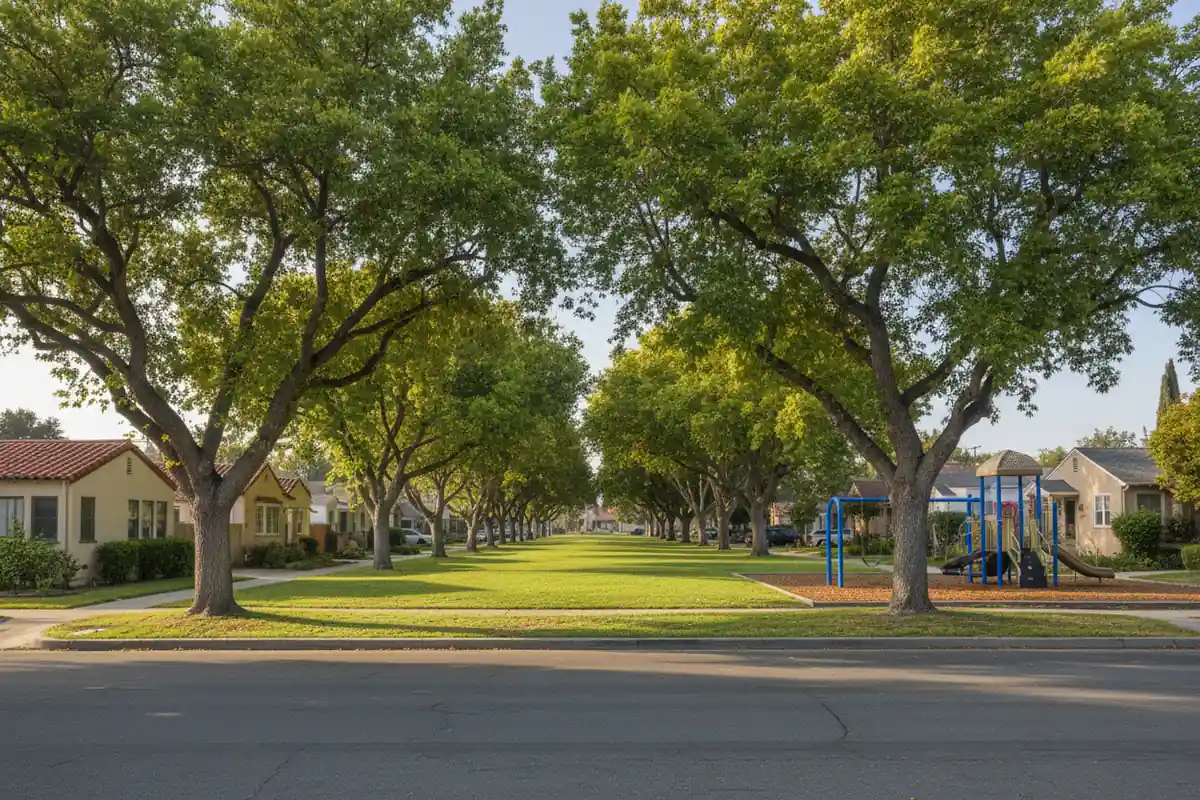
Location shapes a home's value through things an owner cannot change: the neighborhood, the school district, nearness to the coast, views, noise, access and hazard zones. Two homes built the same way can be worth different amounts because of where they sit. An appraiser measures these factors by comparing sales of similar homes nearby.
On this page
What Location Means for Owners
Location is the fixed part of a home's value. Condition can be changed with paint, a new roof or a remodel. The lot, the street and the surrounding area stay where they are, so whatever they add or take away travels with the property from owner to owner.
In a residential appraisal, location is not just a street address. An appraiser looks at it in layers:
- The neighborhood. Its boundaries, how land around it is used, and whether it appears stable, improving or declining.
- The site. The lot itself, its position, its view and how a car or a person reaches it.
- External influences. What sits nearby and affects the home from outside, such as parks, shopping, freeways, flight paths or a mapped hazard zone.
None of these layers is judged in the abstract. An appraiser studies them against comparable sales, called "comps": recent sales of similar homes in the same market area. If buyers in that area pay more for a canyon view or less for a busy street, the comps show it.
San Diego County makes this especially plain. Coastal communities, inland valleys and back-country mountain areas behave like separate markets. A home in Carlsbad, a home in Santee and a home in Julian are each measured against sales near them, not against one another.
Who Location Affects — and When It Matters Most
A seller meets location first through the comps. The factors are already built into the sales an appraiser or a buyer's lender will use. A seller cannot move the house away from I-15 or closer to the beach, but understanding why nearby sales landed where they did makes a pricing conversation easier to follow.
Heirs, executors and trustees face a different question: value on a past date. For estate, probate or trust purposes, value is often tied to the date of death, so the appraisal reflects the location conditions and the market as they stood on that day, not today's market. An attorney or a CPA handling the estate can say which date and which kind of value the matter calls for.
A spouse in a divorce may be dividing more than one property. Location can make two similar-looking homes carry quite different values, and an appraiser documents what the market reflects for each one. How that value is used in the division is a question for a family law attorney.
An owner thinking about a property tax appeal is dealing with two numbers, assessed value and market value.
A refinancing owner usually meets location through the lender's appraisal. That report can surface factors the owner has stopped noticing, like a nearby rail line or a flood zone. A home equity value review describes how a mortgage balance and a value estimate fit together.
The Location Factors Appraisers Examine
Neighborhood boundaries and trend. An appraiser defines the neighborhood the home belongs to and records a formal observation of whether it appears stable, improving or declining. That boundary decides which comps belong in the report.
School districts. District boundaries are a recognized location factor. San Diego County is served by districts including San Diego Unified, Poway Unified, Sweetwater Union, Grossmont Union and Cajon Valley, and a district line can separate homes that are otherwise alike.
Coastal proximity. Beach-adjacent communities such as La Jolla, Del Mar, Coronado, Encinitas, Carlsbad and Oceanside draw from different buyers than inland communities such as El Cajon, Santee, Lakeside, Spring Valley and the inland parts of Chula Vista.
Views. Ocean, bay, canyon and mountain views are treated as distinct influences. A partial ocean view from a Point Loma hillside and a mountain view in Alpine are not interchangeable, and the comps say how each local market treats them.
Hazard zones. Wildfire hazard severity zones mapped by the state affect communities such as Ramona, Alpine, Jamul and parts of Escondido and San Marcos. Flood zones appear on FEMA flood maps. Both can affect insurance availability and cost, which in turn affects which buyers and loans are realistic.
Noise and traffic. Appraisers note nearness to freeways (I-5, I-8, I-15, SR-78, SR-94), flight paths for MCAS Miramar and San Diego International Airport, and rail corridors used by the COASTER, the Trolley and freight trains.
Access and infrastructure. A cul-de-sac reads differently from a through street. Transit access and walkability carry weight in urban neighborhoods like North Park, Hillcrest and Downtown San Diego, while road access and utilities matter more on a rural parcel.
Lot position. A corner lot, an interior lot, a lot backing to open space and a lot backing to a commercial use are each described separately, because buyers tend to treat them differently.
Several of these factors, such as freeway noise, a flight path or a hazard designation, are what appraisers call external obsolescence: a loss in value caused by something outside the property that the owner cannot cure. Interior work does not remove it.
How Appraisers Measure Location in the Comps
Naming a location factor is only half the work; the appraiser also has to show how the market treats it. The comparable-sales approach does this by starting from recent sales of similar homes in the same market area and then accounting for the ways each comp differs from the subject home.
One common way to see a location difference is to compare sales that are alike in most respects but differ in one location feature, such as a view versus no view, or a quiet interior lot versus a lot on a busy street. This is often called paired sales analysis. When the homes are otherwise similar, the difference in what buyers paid points to how that local market treats the feature.
Where the comps already share the subject home's location traits, such as the same side of a canyon, the same school district or the same distance from a freeway, less adjustment is needed. That is one reason the neighborhood boundary matters: choosing comps from the right area lets the sales themselves carry much of the location analysis. The appraisal report shows which comps were used and how each was treated, so the location reasoning can be followed on paper.
Rules, Disclosures, and Fine Print
California law, through the Civil Code, requires a seller to disclose whether a property sits in certain state-mapped hazard areas. This natural hazard disclosure covers zones such as fire hazard areas, flood areas, earthquake fault zones, seismic hazard zones and dam inundation areas, and the list in the law is longer than these examples. A buyer learns about the location's mapped hazards before closing, and that knowledge feeds into what buyers will pay.
A separate form, the Transfer Disclosure Statement, is where a seller reports known material facts about the property. "Material" means important enough to affect a buyer's decision. Location-related conditions the seller knows about, such as recurring drainage from a neighboring slope, can belong there. Exactly what must be disclosed, and any exemption, is a question for a real estate attorney.
Assessed value is its own number. The San Diego County Assessor sets it under Proposition 13 rules, which limit how much it can rise each year while the same owner holds the property. Assessed value is used for property taxes. It is not market value and it is not an appraised value. Because of the yearly limit, a home owned for many years can carry an assessed value well below what it would sell for, and that figure may or may not track what location factors would bring on the open market today. A property tax appeal turns on evidence of market value, which a formal appraisal can supply.
Automated valuation models, or AVMs, add another layer of fine print. An AVM, such as Zillow's Zestimate, is a computer-generated estimate built from public records and reported sales. It does not walk the property, see interior condition, notice that one side of a street backs to a canyon and the other to a freeway, or catch sales that were never reported. Home value calculators work the same way.
Options and Trade-offs for Owners
A formal appraisal is the most detailed option. It is prepared by an appraiser under the professional standards known as USPAP, and it produces a written value opinion with the location analysis shown. It is the kind of report lenders, courts and tax matters commonly use. It takes time to schedule and complete, and it carries a cost.
A comparative market analysis, or CMA, is prepared by a real estate agent. It is not an appraisal. It can help set a listing price, but it is not used for lending, legal or tax purposes, and because an agent prepares it while seeking a listing, it can reflect strategy as much as pure market data.
An online estimate from an AVM is instant and free. It can serve as a starting point, but it misses interior condition, the block-by-block factors described above and recent shifts in a local market. How accurate home value estimates are depends heavily on those gaps.
Assessed value is already on the tax bill, but it answers a different question, as described above.
Each option serves a different use, and the use the value will be put to tends to decide which one fits. A practical next step is often finding the most recent property tax bill and any natural hazard disclosure from the purchase, then asking what the value is needed for and as of what date.
Mistakes to Avoid
Treating a Zestimate as an appraisal is a common mix-up. San Diego County ZIP codes can hold coastal and inland pockets side by side, and an algorithm that averages them can drift far from what nearby comps support.
Assuming the assessed value on a tax bill equals market value is another.
Expecting a renovation to cancel a location drawback leads to disappointment. A new kitchen does not quiet I-8 traffic, move a home off a flight path or lift a wildfire hazard designation. Home value after renovation depends on what buyers nearby actually pay for the work.
Overlooking hazard zone status when pricing a home also causes trouble. A mapped fire or flood zone can change insurance cost and availability, which narrows the buyer pool and affects financing.
Confusing a neighborhood's reputation with the specific block is the last one. A well-regarded area can still contain a lot that backs to a commercial use or sits on a busy corner, and the appraiser measures the lot, not the reputation.
What to Do Next
A formal appraisal documents the location of one specific home: its neighborhood boundary, its lot position, its view, its noise exposure and its hazard zones, all tested against nearby sales. No AVM or CMA records that analysis in the same way. The questions worth gathering are what the value is for, the date it needs to reflect, and which location factors the property carries.
Take the next step
Ready to take the next step with your property?
Tell us about the property and why you need an appraisal, so an independent appraiser can confirm the right scope of work.
How it works
- The propertyIts address and its type.
- The purposeA sale, an estate or probate, a divorce, a trust, tax or a legal matter.
- Your timelineWhen the appraisal is needed.
Take the next step
How we work
- Every request is reviewed by a person. Nothing on this site calculates a value automatically.
- Appraisals are prepared by independent, state-licensed or certified appraisers, never by this website.
- Estimates and cash offers are clearly labeled — never presented as appraisals.
- A request does not commit you to anything.
Frequently asked questions
Do houses increase in value over time?
Not automatically. Time alone does not set value. Whether a home gains depends on its market and its location factors: the neighborhood's direction, nearness to amenities, hazard zone status and what comparable homes nearby are selling for. An appraiser can only say what the market supported as of a given date.
Why is location important when buying a house?
Location covers what a buyer cannot change after closing: the school district, noise, hazard zone status, access to work and services, and the neighborhood's direction. Interior condition can be updated; location cannot. That permanence is why appraisers and the market give it lasting weight.
What does "location" actually mean in a home appraisal?
It means three layers: the neighborhood (boundaries, land use and trend), the site (lot position, view and access), and external influences (nearby amenities, nuisances and hazard zones). An appraiser documents each one and chooses comparable sales from the same market area to reflect them.
How does Zillow determine home values?
The Zestimate is an algorithm-based estimate drawn from public records, tax assessments and reported sale prices. No one inspects the home, and it does not capture interior condition or block-level location factors. It is not an appraisal and is not used for lending, legal or tax purposes.
How does a wildfire hazard zone affect a home's value in San Diego County?
A wildfire hazard severity zone is an external influence an appraiser considers. It can affect insurance cost and availability, which shapes the buyer pool and financing, and those effects show up in comparable sales. A "very high fire hazard severity zone" designation is also part of a seller's natural hazard disclosure under California law.
What is the difference between assessed value and market value?
Assessed value is set by the San Diego County Assessor under Proposition 13 rules and used to figure property tax. Market value is what the home would likely bring on the open market. Because yearly increases in assessed value are limited, long-held homes often have assessed values below market value.
Can a renovation overcome a location disadvantage?
Renovation can improve condition and appeal, but it cannot cure an outside factor like a freeway-adjacent lot, a flight path or a wildfire hazard designation. Appraisers treat those as external obsolescence regardless of interior work, which matters when an owner is deciding how much to spend before a sale.
Does school district affect home value in San Diego County?
Yes, school district boundaries are a recognized location factor. Lines for districts such as Poway Unified and San Diego Unified can separate otherwise similar homes, and an appraiser accounts for that when selecting and adjusting comparable sales.